Category Archives: Latest News

‘It’s local audiences first’: Australia’s new Netflix content boss unveils vision for the streamer

In her first interview since taking the reins, Netflix ANZ’s new content chief offers a few clues about what she’s looking for.

Karl Quinn The Age February 18, 2026

She hasn’t been in the job long – “three months and one week”, to be precise – but Amanda Duthie, the head of content at Netflix Australia and New Zealand, has been busy.

“We have literally been in hundreds of meetings with producers,” she says. “We wanted to open the doors and windows and say, ‘Come and talk to us about your projects, come and get to know us’, because people might know us together or separately, but they’ve never seen that whole team at Netflix, it’s a brand new thing. It’s a curiosity. And it’s been so pleasing that the opportunity to come and pitch to Netflix has been really, really welcomed by the sector.”

The “we” encompasses her second, content director Katherine Slattery, who was formerly at Matchbox Pictures, the production company that this week announced it was folding after 18 years and a string of hit shows (The SlapGlitchHungry GhostsSafe Harbour and the recently released Dog Park among them).

Duthie doesn’t say it, but her invitation to the nation’s filmmakers to come and pitch their wares stands in stark contrast to the way the streamer was perceived under her predecessor, Que Minh Luu, who departed suddenly last April. Industry sources told this masthead last year that relations between the streamer and the production sector had become so strained that many filmmakers had simply decided there was no point in approaching Netflix Australia with their pitches.
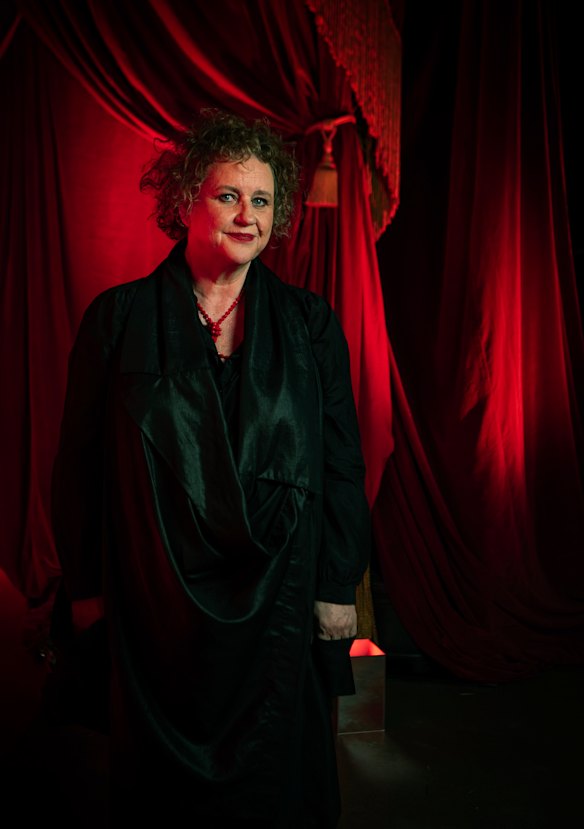
Duthie was poached from Stan, where she had headed the Originals team for five years.
Duthie was poached from Stan, where she had headed the Originals team for five years.Steven Siewert

But at a slick showcase in Sydney on Tuesday before a few hundred key industry players, Duthie made her first public foray since leaving rival streamer Stan last August.

She presented a slate of Australian shows, along with some international productions made here, that will soon drop on the service. Among them: the third and final season of Heartbreak High (“At least until the sequel,” she joked, veering off script, much to the consternation of her minders); the series adaptation of My Brilliant Career; the high-octane action movies War Machine and Apex and surf drama Breakers; the animated Stranger Things spin-off Tales From ’85; the reality competition Wonka (set inside a Gold Coast set modelled on the famous fictional chocolate factory); and Allen, a live-action movie from Ludo, the Brisbane studio behind the world’s most streamed show last year, Bluey.

Duthie readily admits she can take no direct credit for this line-up, as it was all under way long before she arrived (though insiders say she has been very involved in the latter stages of at least some of it).
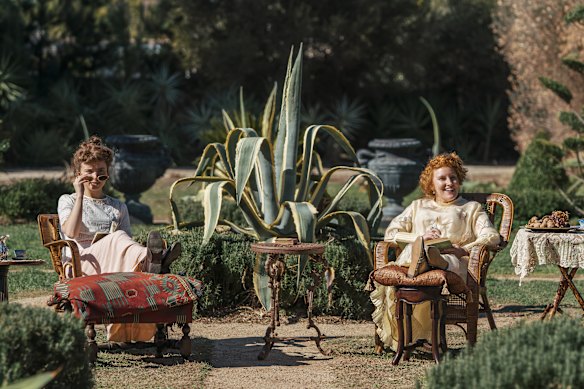
Philippa Northeast and Kate Mulvaney in the upcoming My Brilliant Career series. 
Philippa Northeast and Kate Mulvaney in the upcoming My Brilliant Career series. Netflix

“We’re custodians of those new Netflix original shows, and they’re all exceptional,” she says. “It has been a privilege to take the baton and run with it.”

It’s clear, though, that she is itching to stamp her identity on Netflix’s local slate. As a former executive at the ABC and SBS, and head of Originals at Stan for five years, she’s used to calling the shots rather than riding shotgun.

Related Article
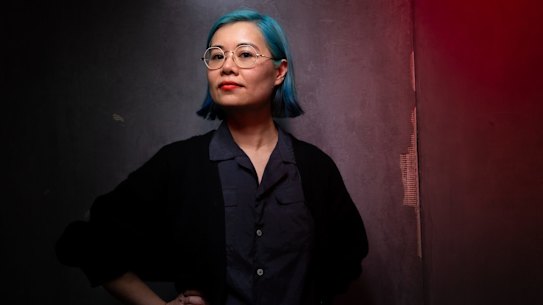
Que Minh Luu, former head of content at Netflix Australia, in August 2022.

‘It’s like Squid Game’: Why Netflix parted ways with content chief Que Minh Luu

She doesn’t know precisely when “we’ll come back out and announce what we’re cooking up for ’27”, she says, but she’s hoping it will be “at some point this year”.

Duthie comes to the job at an interesting juncture. Netflix has made an offer to buy Warner Bros, a massive deal that says much about the maturity of the streaming business (growth through acquisition of rivals rather than customers is now the strategy, it seems). And locally, quotas are now in place for the first time.

Under the Australian content obligation, all streaming services with more than 1 million subscribers will have to fund, produce and screen Australian content (free-to-air and cable broadcasters have long been bound by similar laws, but before January 1, streamers were exempt). The production sector had long argued for such obligations – similar to those in place in Canada and much of Europe – in the belief it would protect against boom-and-bust cycles, and in the hope it would provide a significant uptick in investment.
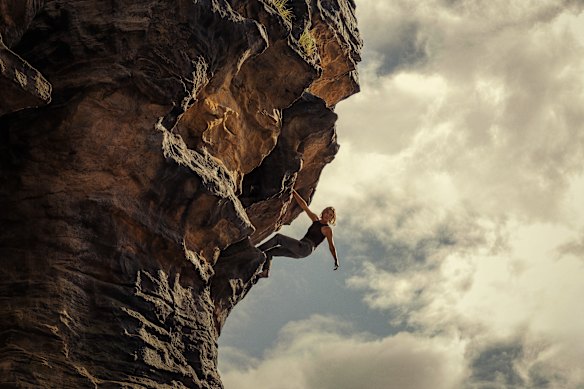
Charlize Theron hangs off the side of a cliff in the Australian-shot thriller Apex.
Charlize Theron hangs off the side of a cliff in the Australian-shot thriller Apex.Kane Skennar/Netflix

The jury is out on the latter, though. And with the ACMA having quietly extended the deadline for streamers – from March to the end of the year– to choose between a 10 per cent levy on revenue or a 7.5 per cent levy on expenditure (because the latter is so difficult to calculate), exactly how much money will be in the pot is still unclear.

As far as Duthie is concerned, though, “it’s business as usual” for Netflix. Whichever model the streamer ultimately chooses, insiders are convinced the company is already meeting its obligation, and then some.

And that means for the hundreds of producers who have already met with the new Netflix team, and all those still waiting for their turn, disappointment is very likely just around the corner. But for the lucky few, it could be the deal of a lifetime … literally.

“I have been aware of some projects for 20 years, and maybe only now they’ll come to light,” Duthie says. “That is not a dog whistle to something I’m about to announce, but what I’m saying is, you can track projects – whether it’s that book, or that play, or that conversation you had at a party 15 years ago. You recall those conversations, and you go, ‘Whatever happened to…?’”

Do you call those people?

“Sometimes, yeah.”

So, don’t give up hope yet, all you producers?

“Exactly, exactly. It’s a long game. Yeah.”

As for the sort of content she’s after, well, who knows.

“Every meeting is like unpacking a new present,” she says. “You don’t know what you’re going to find. Are you going to find an Apple Cider Vinegar, a Boy Swallows Universe, another Heartbreak High, another My Brilliant Career? You walk in with open hearts and minds, keen to hear what is that new thing that you’ve never even imagined. Someone tells you and you go, ‘Oh, yeah. Oh my god, that is it. That is amazing. Come on, let’s talk about it. That’s something’.”

Duthie won’t get to commission anywhere near as many shows at Netflix as she did at Stan. But because Netflix buys shows outright rather than looking for international co-financiers (as Stan, the ABC and most other broadcasters do), she’s convinced she’s in a position to make the most purely Australian shows of her career.

    “When you’re looking at that international financing model, you [have to ask] do you need an English uncle [in the show, to make it palatable to an English broadcaster], do you need a French cousin, what are those things that might be required, on screen and off, to facilitate a locked-in international finance plan?

    “The privilege, the honour, the complete and utter joy of working at Netflix is you don’t have to worry about that. It’s liberating because we don’t have to wait for validation from the international market. [We can say] ‘This is what Australians have always wanted’.”

    But surely Netflix is looking for shows that will travel internationally?

    “Our brief is pretty clear,” she says. “It’s drenched in that desire and that need to find stories that are local, that are going to resonate for local audiences.

    “If the global glow comes, that is great,” she says. “But it’s local audiences first.”
    Why one of Australia’s most successful TV production companies is being shut down

    Published: February 19, 2026 4.19pm AEDT

    Author

    1. Phoebe HartAssociate Professor, Film Screen & Animation, Queensland University of Technology

    Members of the Australian screen industry have been shocked to learn one of the nation’s most successful and prolific production companies, Matchbox Pictures – and its subsidiary Tony Ayres Productions – will shut their doors this week.

    Matchbox was closed by its parent company, Universal International Studios, and the closure has resulted in the loss of 30 full-time equivalent positions.

    The reasons cited by Universal are vague. According to a media release, “extensive evaluation of the business and the broader production landscape” influenced the decision. The global production arm of NBCUniversal has said it will take on new business and talent on a case-by-case basis from here on.

    This is crushing news for the local screen industry, which finds itself increasingly beholden to decisions made by overseas corporations.

    18 years in the making

    Matchbox Pictures was founded in 2008 by screen industry stalwarts Tony Ayres, Penny Chapman, Helen Bowden, Michael McMahon and Helen Panckhurst.

    Together, they have made some of Australia’s most iconic television series including The Slap (2011). This series changed how the world perceived Australian drama, as an innovative, gritty morality play remade in the United States.

    Read news powered by real experts.

    The Matchbox team was also responsible for other critically acclaimed and AACTA Award winning projects, such as Secret City (2016–19), Stateless (2020) and Glitch (2015–19), among others.

    More recently, they gave us The Survivors (2025), the best performing local TV drama on Netflix in 2025.

    https://youtube.com/watch?v=c69c1P-EURg%3Fwmode%3Dtransparent%26start%3D0

    As one of the bigger employers of local talent and crew, one might ask how this happened.

    Acquisition by Universal

    In 2011, Matchbox sold a majority stake to NBCUniversal. At the time it seemed like a shrewd move. It meant the company, which is headquartered in Sydney with offices in Melbourne and Singapore, would get better access to international markets, stronger global distribution channels, and the ability to upscale productions.

    However, it also meant Matchbox was subject to global winds of change, rather than local breezes. And the wind is blowing. Comcast, which owns NBCUniversal, is in downturn, reporting a significant revenue decline and job cuts in 2025. This means they’re probably eager to lighten the load.

    Another reason is the changing nature of streaming content regulation in Australia. The Labor government’s move last year towards regulating local content quotas for media giants such as Netflix was a big win for advocates.

    But it also introduces uncertainty, which means international companies may choose to withdraw from the region instead of investing in Australian content.

    There is no law requiring overseas content providers to maintain a presence in Australia. Although Universal has said it will continue to do business here, the new environment arguably makes maintaining a fully-staffed production arm less attractive.

    The Matchbox closure is the first clear example of this.


    Read more: New laws will force streaming giants to invest in local content – but it’s too soon to celebrate


    A big step back

    So, where does the recent closure leave the local industry? For one thing, we’re likely to see reduced capacity to nurture in-depth, large-scale local productions.

    It also makes the future uncertain for up-and-coming practitioners, especially those from diverse backgrounds, which Matchbox was well-known for championing. The shutdown means the loss of salaried jobs and a consistent commissioning pipeline.

    Matchbox was also a steady source of contract work for freelancers – whose situation is now even more precarious.

    It’s possible the closure will lead to more opportunities for mid-size producers pitching their projects to broadcasters, studios and streaming platforms – especially with the introduction of new streaming quotas for local content.

    There are some left in Australia that may step in to fill the gap: Hoodlum Entertainment, CJZ, Curio Pictures, Endemol Shine Australia, See-Saw Film, Beyond International and Goalpost Pictures spring to mind.

    Then again, some of these are also owned by overseas interests. It’s a “watch this space” situation.

    In conversation: Pippa Harris and Liza Marshall on producing ‘Hamnet’, why film industry “is in a strange place”

    By Tim Dams Screen Daily 14 February 2026

    Pippa Harris and Liza Marshall

    Source: James Gourley / Bafta / Rex Shutterstock

    Pippa Harris and Liza Marshall

    Hamnet began its journey to the screen when Hera Pictures’ Liza Marshall optioned Maggie O’Farrell’s 2020 novel of the same name, then bringing in Neal Street Productions’ Pippa Harris — a former colleague — to develop the feature together. The film was set up at Focus Features, which released in North America, with Universal Pictures handling internationally.

    Chloé Zhao directs, co-writing with O’Farrell, and the producer team is rounded out by Zhao’s partner at Book of Shadows Nicolas Gonda, Amblin’s Steven Spielberg and Neal Street’s Sam Mendes. At press time, Hamnet’s worldwide box office stood at $63.4m, including a powerful $21.2m (£15.8m) in the UK and Ireland — surpassing fellow awards contenders One Battle After Another and Marty Supreme in the territory. Hamnet, which is nominated for eight Oscars and 11 Baftas, is on course to overtake Sinners ($22.3m/£16.4m) in the UK and Ireland, becoming this season’s highest-grossing Bafta best film nominee in the territory.

    Marshall launched Hera Pictures in 2017 after heading Scott Free Productions UK and working at Channel 4 as head of drama. Her recent credits include 2023 film The End We Start From, starring Jodie Comer, and ITV’s 2025 ratings hit I Fought The Law, starring Sheridan Smith. Hera is in pre-production on The Return Of Stanley Atwell, written and directed by Brian Welsh, and starring Nicholas Galitzine and Marisa Abela.

    Harris launched Neal Street with Mendes and Caro Newling in 2003. The banner’s feature credits include Mendes’s 1917Away We GoEmpire Of LightRevolutionary Road and Jarhead. TV hits include Call The MidwifePenny Dreadful and Britannia. Coming up is an adaptation of The Magic Faraway Tree, and Mendes’s ambitious, Sony-backed four-film big-screen event about The Beatles.

    Screen International brought together Marshall and Harris to discuss the journey to the screen of Hamnet — which explores the grief of William Shakespeare (Paul Mescal) and his wife Agnes (Jessie Buckley) following the death of their son Hamnet (Jacobi Jupe) — as well as the current landscape for UK independent film and TV production.

    Screen: Liza, this started with you optioning the book.

    Liza Marshall: It was sent to me by Maggie’s agent in October 2019 [before publication], and I completely fell in love with it. So I got on a Zoom with Maggie, and she let me buy the rights. I liked that it has Agnes at the centre of the narrative — that Maggie rescued her from the shadows of history — and the way it imagines where Shakespeare would have got some of his inspiration. The story is unbearably sad, but the way Shakespeare transforms that into the play [Hamlet], and that there is hope at the end of the book — I just felt that narrative would work.

    Pippa, how did you both team up?

    Pippa Harris: We’ve known each other for years. We met in our twenties at Carlton, part of ITV, and worked together closely for a couple of years.

    Marshall: It was on [1990s soap opera] London Bridge. I was script editor, you were executive producer.

    Harris: I read the book and the agent said Liza had the rights, so I thought it would be worth [getting in touch]. You’d already had a few people like me contact you. Somebody had said, “We’ll set this up for TV,” and I think you and Maggie were tempted. Then we started talking about a film…

    Marshall: …and imagining it on a bigger scale.

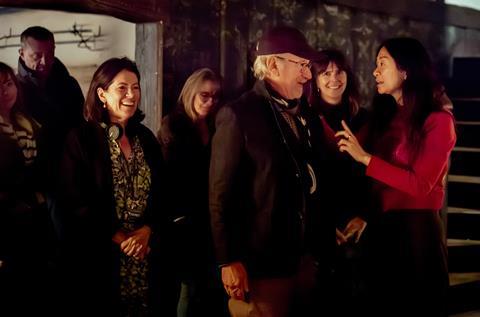
    Pippa Harris (left) with Steven Spielberg, Liza Marshall and director Chloe Zhao on the set of 'Hamnet'

    Source: Agata Grzybowska

    Pippa Harris (left) with Steven Spielberg, Liza Marshall and director Chloe Zhao on the set of ‘Hamnet’

    How did Amblin and Steven Spielberg get involved?

    Harris: Sam and I did 1917 with Amblin. When we first got together with Liza, they were still funding films. Their model has changed now — they’ve gone back to their roots [as producers]. But at the time, we thought, “Great, that’s a one-stop shop.” And of course, Steven’s an incredible collaborator.

    Marshall: Chloé was the first person we thought of to direct. We both loved The Rider, particularly. And there’s something about the way she photographs nature. Also, someone who’s not as steeped in Shakespeare as we are as British people — to get that different perspective.

    Harris: We started talking to Chloé through her people. Then, by chance, I was in Telluride in 2022 at the same time as Chloé, and met her there.

    Marshall: The strike and various things delayed it. We got a draft [script from Zhao and O’Farrell]. It then went pretty quickly, because Paul had to have an out date to do press for Gladiator.

    Harris: Also, Steven was able to take it to Focus. If anyone can get a greenlight, it’s Steven Spielberg. He was able to have those top-level conversations, so that process was very smooth compared to other films we’ve worked on.

    What is the budget for the film?

    Harris: Roughly $30m (£22m).

    Was it fully financed by Focus?

    Harris: Yes. It was great. There is an immense relief when you get someone like Focus [on board].

    Five of you produced the film. How would you describe the division of responsibilities?

    Marshall: Pippa, Nic and I were boots on the ground in terms of being there through pre-production, the recces and on set. We shared it so there was always somebody there for Chloé, keeping an eye on it all.

    Harris: Sam and Steven were there as sounding boards. In pre-production, Chloé relied on Steven quite a bit, particularly in the casting of the kids. She had tapes of the children, and obviously if Steven says, “That’s a great piece of casting,” you think, “Oh, probably okay then.”

    Marshall: He gave us brilliant pointers about how to do improvisational scenes with the kids, and not to get them to learn the lines. Because then it becomes a bit more like a school play performance. [You want them to] react in the moment.

    Harris: In post, Sam, Liza and Maggie and I saw the first cut together. Because Sam’s another director, he comes at it slightly differently to Maggie, Liza and me. He was able to talk to Chloé, in her own language, about its very specific moments and to give very specific notes that she found really helpful. Afterwards, she said Steven was similarly helpful.

    Marshall: Everybody was doing quite distinct but intermeshed things. And obviously Nic and Chloé have their company together, and they’re incredibly close. Nic’s just such a lovely man. We didn’t really know him before this collaboration, but he became an essential part of the team.

    Harris: Liza brought on board a brilliant EP called Laurie Borg, who she had worked with before. He was instrumental as well, just in terms of the day in, day out. Are we hitting the schedule? How many people are coming for lunch, all that stuff.

    Marshall: His calm energy was perfect with Chloé, because it created that space where she could experiment and try things out.

    And it is an emotional story to navigate on set too.

    Marshall: At the end of each week Chloé put on a disco tune to get the cast and the crew to dance. Particularly for the children, it means their memory is of the dancing, not pretending to die. After Hamnet’s death, Jacobi asked for a bonus dance track, and chose ‘Stayin’ Alive’. He came up from the sheet [his death shroud] and they were all dancing around. That helped change the atmosphere.

    Harris: Chloé also brought her own layer of mysticism to the process, and has talked a lot about [using] dream workshops. That wasn’t something I’d ever come across before. Initially, when you’re looking at every penny of the budget, you’re thinking, “Really, we’re paying for the dream coach?” Then as it went along, you realise how integral Kim [Gillingham], the dream coach, was to the process.

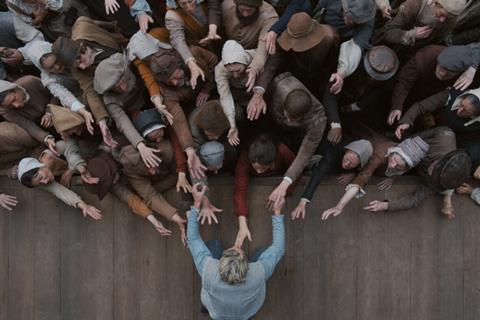
    Hamnet new

    Source: Focus Features

    Hamnet

    Why do you think Hamnet has blown up at the box office?

    Marshall: I think it’s connecting because we’re living in such bleak times. Everybody is going to sit in a darkened room with strangers, and then come out and feel like it’s a cathartic process that they’ve been through. There are these videos on TikTok, before Hamnet and after Hamnet — people have got their make-up on, and then they’ve got all the make-up coming down their face.

    Harris: Although it’s a very sad film at times, people come out of it feeling that it’s somehow been life-affirming. Particularly when so many other films’ pivotal moments are all about violence and people being shot.

    Does Hamnet tell us anything about the state of the UK film industry at the moment?

    Harris: The film industry is in a strange place because it feels, on the one hand, as though funding for massive films — like Sinners or even our own Beatles project — is relatively attainable. If you’re making smaller-budgeted films that the UK has excelled at, like The Ballad Of Wallis Island and Pillion, they’re not easy to make, but there are funders for those films. What’s become increasingly difficult is mid-range — anything that sits at £10m-£40m [$14m-$54m]. The American studios have retrenched a bit, so Searchlight, Focus and Sony Classics are maybe not doing quite so many.

    Liza and I made our careers in television, and we still do TV as production entities. It’s the television that keeps you going — it’s virtually impossible to run a UK company simply making films.

    Is the indie film tax credit helping?

    Harris: That is slightly lower, but it’s definitely helping. And there is a will in government to find ways of supporting film, and looking at whether the apprenticeship levy can be used more effectively for film and television — it’s difficult to use that at the moment, because it’s not geared towards the freelance market. And so many people working in film are freelancers.

    What other government interventions would you like to see?

    Harris: For film, the thing that the government should do is simply to keep the tax credit as it is — the stability of the UK film tax credit has been transformational. It’s been 25 years now, and it has transformed the industry. The government has been looking at possibly changing the high-end TV tax credit and giving a boost to productions like Adolescence, or slightly lower-budget productions, and that would be helpful — because after all, witness the two of us. TV is the training ground for writers, directors, everything.

    Marshall: UK talent comes through television generally, not always.

    How about financing films with a female director, like Hamnet? Is that getting easier?

    Harris: If you look at the top films in 2025, just 8% have been directed by women [according to the USC’s Annenberg Inclusion Initiative]. So there is still a massive problem. There’s an element of studio heads — who are mainly men — being nervous about trusting women with bigger-budget films, even though there are ample examples of women who’ve directed hugely successful, profitable movies.

    I’ve never had conversations where people have said, “You can’t have a woman direct this film.” It doesn’t work like that. It’s more insidious in that when you’re looking at [director] shortlists, you suddenly think, “Well, there don’t seem to be many, or any, women on this shortlist.”

    Liza, you launched The Return Of Stanley Atwell at Cannes last year, with pre-sales.

    Marshall: Protagonist Pictures made some good sales there, and then we’ve partnered with John Gore Studios, and they’re great. So we’ve got a budget. It’s never enough money, trying to make a film. It’s always rocky.

    Pippa, why is The Beatles not coming out until 2028?

    Harris: The plan is that, potentially, they’ll all be available in cinemas at the same time. So if you want to binge, watching all four of them, you’ll be able to do that. But we won’t finish filming until the end of this year. 

    Matchbox Pictures to close after 18 years

    Jackie Keast· IF magazine. February 17, 2026

    Alastair McKinnon.

    Universal International Studios has announced that Matchbox Pictures will cease operations, marking the end of one of the most prominent and prolific production companies in Australia.

    In a statement provided to IF, the studio said the decision to close the company followed “extensive evaluation of the business and the broader production landscape.”

    “Universal International Studios maintains its commitment to Australia, but as strategic priorities shift the studio is evolving its operating model in the region,” it said.

    “Moving forward the company will evaluate production opportunities and engage with local producers and talent on a case-by-case basis as new projects emerge.”

    The studio added Matchbox had “a long and distinguished history” and had played a significant role in elevating Australian creative talent.

    Matchbox Pictures was founded by Tony Ayres, Penny Chapman, Helen Bowden, Michael McMahon and Helen Pankhurst in 2008. In 2011, NBCUniversal International took a majority stake, its first investment in a company outside the UK, and assumed full ownership in 2014.

    In 2018, Ayres launched his own company Tony Ayres Productions (TAP), backed by Matchbox and Universal International Studios; it will also cease operations as part of this decision. Ayres is currently focused on writing.

    Yerin Ha and Charlie Vickers in ‘The Survivors’.

    Matchbox’s most recent project is ABC comedy Dog Park, currently airing on the ABC, starring Leon Ford and Celia Pacquola. The Survivors, produced by TAP and starring Yerin Ha, was Netflix’s most watched local series in 2025, garnering 19.7 million views in the first half of the year and  8.3 million views in the second.

    Across its history, Matchbox produced more than 55 projects, working with every network in Australia and a variety of international partners. While best known for high-end scripted drama, its slate spanned both film and television across a variety of genres, including children’s, comedy, documentary and reality. It won Screen Producers Australia’s production company of the year award three times.

    2011’s The Slap was widely regarded as a turning point for the international perception of Australian drama. International distributor DCD Rights sold it around the world, including to the BBC, Arte, SundanceTV and DIRECTV, as well as a format deal in the US. DCD RIghts CEO Nicky Davies Williams has previously said the series helped convince global buyers that Australian scripted television could be world class.

    Other key successes included Safe Harbour, which won an international EmmyStateless, produced with Cate Blanchett’s Dirty Films, which premiered at the Berlin International Film Festival, and House of Gods, whose star Kamel El Basha won a best actor award at Series Mania. Children’s series Nowhere Boys won a BAFTA and an International Emmy, while Glitch was one of the first Australian series to ever be co-produced by Netflix, and Clickbait hit the no.1 spot on Netflix in more than 20 countries.

    In recent years Matchbox also provided production services for a variety of Universal projects in Australia, such as La Brea and All Her Fault.

    “Matchbox has made an enormous contribution to the Australian film and television landscape with groundbreaking programs that have defined our industry and captivated audiences here and around the world. I’m immensely proud of the achievements of the entire Matchbox team and the quality of work that the company has produced over the past 18 years,” said managing director Alastair McKinnon in a statement.

    In addition to its founders, Matchbox Pictures has been home to many prominent industry names, with current and past staff including Amanda Higgs, Debbie Lee, Louise Fox, Kylie Washington, Chris Oliver-Taylor, Que Minh Luu and Matt Vitins.

    The company has been committed to diversity and inclusion, as recognised by the Screen Diversity and Inclusion Network in 2018 for projects such as serial The Heights and drama Hungry Ghosts. It has also been a leader in environmental sustainability and was one of the founding members of Sustainable Screens Australia.

    What’s shooting right now in Australia? IF’s In Production wrap – January 2026

    Jackie Keast·

    FilmProductionTV & Streaming

    ·January 23, 2026 IF magazine

    ‘Ground Up’.

    IF takes a look at the feature films and scripted series in production right now around the country.

    Have we missed anything, or want to add and update any changes? Email us at publicity@if.com.au

    Feature film

    Untitled Amazon MGM Studios/Navy Seal Mike Thornton Project

    Patrick Hughes has just rolled camera on the Gold Coast on his (as yet untitled) Amazon MGM Vietnam War thriller, which centres on Navy SEAL Mike Thornton, a recipient of the Congressional Medal of Honor. Alan Ritchson, who co-wrote the script with Jason Hall and Mark Semos, stars as Thornton, with the cast also including Joe Cole and Australian Hoa Xuande. Production is underway at Village Roadshow Studios, with the film lured Down Under by the Location Offset and Screen Queensland’s Production Strategy. The project is expected to create 260 jobs for local cast and crew and inject an estimated $50 million into the Queensland economy. Sylvester Stallone and D. Matt Geller are producing under Balboa Productions, alongside Hidden Pictures’ Todd Lieberman and Alex Young, Ritchson’s AllyCat Entertainment, and Alan Rautbort.

    https://www.instagram.com/p/DTjG6jEk1Eg/embed/captioned/?cr=1&v=14&wp=1316&rd=https%3A%2F%2Fif.com.au&rp=%2Fwhats-shooting-right-now-in-australia-ifs-in-production-wrap-january-2026%2F#%7B%22ci%22%3A0%2C%22os%22%3A3380.900000035763%7D

    Empire City

    Gerard Butler-starrer Empire City is still underway Melbourne. Directed by Love and Monsters‘ Michael Matthews and written by Brian Tucker and S. Craig Zahler, the film centres on a hostage crisis that erupts inside New York’s Clybourn Building. Butler is firefighter Rhett, who with his squad and NYPD wife Dani (Hayley Atwell), must fight and navigate his way through the building to rescue captives. Filming is taking place at Docklands Studios Melbourne and on location throughout the city, with Swanston and Collins streets dressed as downtown Manhattan earlier this month. The film is supported by the federal Location Offset and the Victorian Screen Rebate. Australian Paul Currie is among the producers, who also include Marc Butan and Alan Siegal.

    Bluey: The Movie

    Production remains underway in Brisbane on the world’s favourite blue heeler’s big screen debut, the CG animated Bluey: The Movie. Written and directed by the series creator Joe Brumm, the film features the show’s regular vocal cast, including Melanie Zanetti and David McCormack. Amber Naismith is animation producer with Richard Jeffery co-director, while EPs include Justine Flynn for BBC Studios, and Ludo Studio’s Charlie Aspinwall and Daley Pearson. Cosmic Dino is providing end-to-end CG animation services for the project. Disney has worldwide theatrical rights, with the film to be released in August 2027.

    Neverending Pillow Fort

    Brisbane’s Like A Photon Creative are the lead producers on animated feature Neverending Pillow Fort, an adaptation of the hit children’s novel of the same name by Will Taylor. A partnership with MIMO Studios and Crayola Studios, the film follows lifelong best friends Maggie and Abby as they go through their first growing pains of adolescence, uncovering a secret world that connects in mysterious and wondrous ways. Like A Photon previously worked with MIMO Studios on The Pout Pout Fish, which is currently in cinemas and has earnt, as of yesterday,

    Big Sister

    Independent family feature Big Sister, written, directed and executive produced by Andrea Belmonte, is, per Instagram, on its last week of filming on the Gold Coast. Belmonte stars as Andy, a UK medical exchange student who loses her passport the night before her flight and is pulled into an unexpected adventure by her Australian host sister Mia (Chloe Haraldson). The project is the first from Belmonte’s production company Cinemonte.

    The Sundowner

    Director Matthew Holmes has shot three block of The Sundowner, with filming to finish early this year. Set in 1934, it follows a traumatised WW1 veteran living as a swagman gradually becomes a desperate and dangerous fugitive. The cast includes Joshua Jaeger, Arthur Angel and Jacob Junior Nayinggul. Holmes wrote the script with Aidan Phelan, and produces with Felipe Teplitsky, Russell Cunningham and Joshua Little.

    Heritage

    Horror/thriller Heritage, written and directed by Les Zig, is still filming in Melbourne, looking to wrap around April. Ana Isabel produces the film and leads the cast as Sara, a charlatan clairvoyant with a family history of paranoid schizophrenia who begins experiencing visions. The cast also includes Scott Major, Carmelina Di Guglielmo, Diviya Mahto, Day Straube, Greg Pandelidis, Seth Kannof, Fiona Crombie, Sophie Alice, Loren Lennox, Antonios Baxevanidis, Marty Rhone, Kashmala Burney and Divi Mahto.

    My Inner Child

    Director Maria Isabel de la Ossa’s indie film My Inner Child, shooting in Sydney, is on a short holiday break and will return to filming next month through to April. Written by Michelle Rouady and produced by Thea O’Conor, the film follows adults questioning their life choices who meet their inner children, revealing tension between societal duties and authentic living. The cast includes Tahlia  Crinis, Rouady, Ken Welsh and Clara Helms.

    The Jewel Wasp

    WA filmmaker Peter Renzullo continues to film his latest featureThe Jewel Wasp. Shooting mostly at Perth City Farm, the micro-budget psychological thriller follows an underground agency dedicated to capturing perpetrators of horrific crimes before they are caught by law enforcement. The cast includes Jay Jay Jegathessan, Kate Lloyd, Paul Cozens, Nate Garnett, Steve Kio, Laura Mac, Grace Garnett, James Broadhurst, Vipin Murikulathil and Ricky Pulko. Ian Hale is executive producing, with Halo Films to handle distribution.

    Powder Milk and Ice Cream

    Coming-of-age drama Powder Milk and Ice Cream, written and directed by Brian Jewell, just wrapped a three-day second block in Victoria at Bacchus Marsh, with a 12-day block to follow in April in Trentham. Set it a small rural town in early 2020s Australia, it follows Mandy (Stella Shute) and Joey (Devi Berends), who share a gentle, blossoming first love, nurtured by friendship and innocence, until an unexpected tragedy quietly reshapes the course of their young lives. The cast also includes Jewell, Sarah Crowle, Jessica Stanley and Caio Macdonald, while The Wiggle’s Anthony Field will make a cameo as a publican. Verdict Film Group has boarded the production.

    Behind the scenes of ‘Powder Milk and Ice Cream’.

    Scripted series

    Ground Up

    ABC/Gristmill’s satirical comedy Ground Up, which centres on Tasmania’s efforts to enter the AFL, is currently underway, with production spanning both Tasmania and Victoria. Created and written by Gary McCaffrie, it follows AFL administrator Hugh Shen, played by Sam Pang. All six episodes will be directed by Gristmill’s Wayne Hope, who produces with Robyn Butler, MaryAnne Carroll and McCaffrie.

    Dalliance

    Hugo Weaving and Heather Mitchell topline Paramount+ and Roadshow Rough Diamond’s romantic drama Dalliance, which is currently in its second week of shoot in Sydney. Weaving is Billy, a former cameraman, who encounters Mitchell’s Dani on a Sydney Harbour ferry as their different worlds intersect. The cast also includes Georgie Parker, Noah Taylor and Wayne Blair. Mitchell is an executive producer alongside John and Dan Edwards, with Pip Karmel the lead writer.

    High Country : What Lies Beneath

    Production is still underway in Victoria on season two of Binge’s High Country, from Curio Pictures. Leah Purcell reprises her role as Detective Andie Witford, who is drawn this season into a bigger case than she could have ever imagined. New faces in the cast this season include Brendan Cowell, Ryan Corr and Nadine Garner, while Ian McElhinney, Sara Wiseman, and Aaron Pedersen return. High Country is created John Ridley and Marcia Gardner, who the second season with Kim Wilson and Beck Cole, with Lucy Gaffy and Ben Lucas directing and Jo Porter, Rachel Gardner and Angie Fielder producing. Production is taking place across Jamieson, Mansfield and Eildon, as well as in greater Melbourne.

    https://www.instagram.com/p/DTdoWKcE6OL/embed/captioned/?cr=1&v=14&wp=1316&rd=https%3A%2F%2Fif.com.au&rp=%2Fwhats-shooting-right-now-in-australia-ifs-in-production-wrap-january-2026%2F#%7B%22ci%22%3A1%2C%22os%22%3A3383.300000011921%7D

    Happy House

    Media World Pictures’ 26 x 11 mins animated sitcom Happy House, for the ABC, is in production in Victoria. Co-created and written by Alix Beane and Marisa Nathar, the series is set in a world where internet-famous animals are the creators of their own adorable viral content. Directed by Kelly Lynagh, Happy House features animation from 12field Animation. Carmel McAloon is producing with executive Producers Colin South, Carmel McAloon Beane and Nathar.

    Do Not Watch This Show S2

    The second season of ABC’s animated children’s series Do Not Watch This Show, remains in production in Victoria. The Lee Bones Production series is based on the book series Do Not Open This Book by Andy Lee, who writes alongside Jason Marion and Ray Matsen. Patrick Crawley directs, with series producer Nick Campbell, line producer Megan Brock and producers Lee and Greg Sitch. The first season has been a hit for the ABC, which reports the first episode hit an average audience of more than 2.5 million.

    Have we missed anything, or want to add and update any changes? Email us at publicity@if.com.au.

    For more information on projects in development, pre-production, in production and post-production, upgrade your subscription to include our In Production listings. 

    ‘The Survivors’ again leads local Netflix titles in latest engagement report

    Sean Slatter·

    NewsTV & Streaming

    IF magazine·January 21, 2026

    The Survivrs cast and creators arrive at ACMI, Melbourne for an exclusive screening of new Aussie limited-drama series last year. (Photo by Graham Denholm/Getty Images for Organic PR)

    Tony Ayres Productions’ mystery series The Survivors has retained its position as the most-watched Australian TV series on Netflix in the streamer’s latest engagement report, garnering 8.3 million views and a total of 41.1 million viewing hours in the second half of last year.

    Based on viewing data from July to December, the report measures engagement by views (total hours viewed divided by runtime) and represents 96 billion hours watched on Netflix.

    Released on June 6, The Survivors stars Charlie Vickers as Kieran Elliott, a young man whose life changed forever when three people died in the seaside town where he grew up. The Tasmanian-shot series ranked 183rd in the latest report, having reached 44th in the previous edition with 19.7 million views.

    Other local titles in the top 1000 included Gristmill’s The InBESTigators S1 & S2 (4.2 million and 3.8 million views) and Little Lunch (2.9 million views), Glenpictures’ Gymnastics Academy: A Second Chance (4 million views), and Easy Tiger and Ronde Media’s neo western Territory (2.7 million views).

    Season 2 of dark comedy Wednesday was the most-watched show in the report, with 124 million views, while Season 1 ranked eighth with 47 million views. 

    There was some Australian representation in the top three, with the limited series Untamed, led by Eric Bana, coming in third with 92.8 million views.

    Bana executive-produced and starred in the Warner Bros. Television mystery-thriller, which follows a special agent for the National Parks Service whose investigation of a brutal death sends him on a collision course with the dark secrets within the park, and in his own past. The series has been renewed for a second season.

    Find the full report here.

    How to make an Australian crime series

    Crime series are a mainstay of Australian television but these days, getting a new series off the ground means following some very strict rules.

    20 Jan 2026 10:53 Screen Hub

    Anthony Morris

    Anna Torv as Tig Pollard in Dustfall. Photo: Vince Valitutti / Soapbox Productions.

    Everywhere you look, Australian television is struggling. Well, almost everywhere: there’s one genre that’s managed to hang on while the others battle to survive. We speak, of course, of crime.

    Or to be more specific, crime that involves a mystery; the days of Underbelly are sadly far behind us (sorry Run). The ABC and the streaming services do still make the occasional dramedy or topical take on social issues, but the glue that holds them together? Yeah, it’s crime.

    Which provides an opportunity for people looking to get a toehold on our television screens. But you can forget about dusting off that autobiographical blog post about the time you put a bunch of fancy bananas through the scanner at Coles and said they were the cheap ones. When you’re talking Australian crime drama, there are some very strict rules you need to follow if you’re going to get your foot in the door.

    Fortunately, we’ve put together a guide.

    How to make an Australian crime series – quick links

    Step one: the setting

    Treasure And Dirt. Image: Abc.Treasure and Dirt. Image: ABC.

    You have two choices: scenic coastal small town, or scenic outback small town. Don’t get too attached, because your final choice will almost certainly come down to wherever offers you the most (or any) funding. Ever wondered why multiple crime series have been set in Tasmania in recent years? Mystery solved.

    As for why your murder mystery is going to be set in a small town, and not any of the major cities where most Australians actually live and murder each other, the reason is simple. The overseas markets you’ll be trying to sell your series to already have big cities and they’re not interested in the Australian version. The desert or the coast, that’s what they like to see, and if you can pick up some funding from a tourism body to promote those areas, every little bit counts.

    Step two: the lead

    Somewhat surprisingly considering Australia has multiple networks aimed directly at older viewers, forget about a Vera-style older or quirkier hero. Our murder detectives are all (relatively) young, good looking, and – this is the important part – haunted by something in their past that has brought them back to the small town they once called home.

    If your story doesn’t begin with your lead arriving wearing a concerned expression because they’re not sure how the locals are going to react to seeing them back in the small town they once called home, you should pack up and go home (to the small town you once called… you get the idea) because your story isn’t going anywhere (let alone the small town you… I’ll stop now).

    Sure, sometimes there’s room to mix it up a little. Maybe your lead is a fish-out-of-water type who’s been paired with a local who knows where the bodies are buried? Whatever. Australian crime series are lean mean storytelling machines and everything that doesn’t drive the plot forward (unless it’s long lingering shots of the scenery sponsored by the local tourism body) falls by the wayside.

    You need a lead with a past because pre-established relationships are a storytelling shortcut that a crime series can’t survive without. Even if you’ve got six hour-length episodes, you don’t have time for your hero to slowly figure out who’s who and what’s what. And they can’t be welcomed back with open arms, because where’s the drama in that? They left town years ago under a cloud, now they’re back and nobody’s happy to see them. Case closed

    Step three: the locals

    Steve Bisley, Madeleine Sami And Kate Box In Deadloch Season 2. Image: Prime.Steve Bisley, Madeleine Sami and Kate Box in Deadloch Season 2. Image: Prime.

    They’re not always stock characters, but they are just pieces to be moved around the board. Get ready to meet the old flame, the bungling or inexperienced local cop (because if they knew what they were doing, we wouldn’t need the lead), the old folks with ‘A Past’ who may or may not have Alzheimer’s, the angry blokes down the pub, the sleazy rich dude who owns the town, his bozo henchmen, the bitchy wine mums, the kids on bikes who maybe saw something, and some broad Aussie cliches the writers have a grudge against.

    Fortunately, decent casting can disguise a lot of these flaws. What you really want is some quality local actors – preferably comedians, as they’re great at doing a lot with a little – to play these roles, because then your scenic small town might feel like a place where people actually live, and not just a cardboard backdrop for a couple of murders and a bunch of lectures disguised as conversation.

    Step four: the crime

    It’s either a murder or a disappearance that might as well be a murder, depending on whether the murder victim is interesting enough to bring back later. But that still gives you plenty of leeway to mess around… okay, you only really have one of two ways to mess around: either the murder was personal, or it’s just the tip of the iceberg.

    Personal is when it turns out the victim was killed for relatively mundane reasons. Sometimes, if you’re feeling especially bold, you can even make it an accident. It doesn’t really matter, because along the way there’s going to be a whole bunch of other crimes and shonky business brought to the surface – so much so that it’ll feel like just maybe the murder was little more than an excuse to take the viewer on a journey through the lives of a bunch of sordid and petty people.

    Tip of the iceberg is when the victim was killed for big deal reasons, which usually means they were involved in some kind of criminal big deal. Maybe they were a troublemaker, maybe they were involved and wanted to escape, maybe they stumbled onto something they shouldn’t have. It doesn’t really matter, because along the way there’s going to be a whole bunch of other crimes and shonky business brought to the surface – so much so that it’ll feel like just maybe the murder was little more than an excuse to take the viewer on a journey through the lives of a bunch of sordid and petty people.

    Step five: the plot

    So if all the crimes are the same kind of crime, what makes one crime series different from another? That’s where the plot comes in – and this time you really do get a choice.

    Behind door number one is the traditional murder mystery. This is a murder that’s an actual mystery – the audience is given enough clues to (in theory) figure out who the killer is before the big reveal at the end. These are seen as a little old fashioned these days, but they’re still an audience favourite, especially when they’re done well.

    The Death in Paradise series is a good example, including the local version, Return to Paradise – which, by the way, is set in a scenic costal small town and features a lead who returned with a cloud over her head. Thing is, they’re a bit tricky to drag out over multiple episodes, so they’re almost always a series with a string of stand-alone episodes, which are difficult to write without spending money on writers.

    Behind door number two is pretty much everything else, which usually operates on what we’ll call ‘Law & Order logic’. That’s because if you watched the opening of any given episode of classic Law & Order, wandered away for 15 minutes, then came back, you’d have no idea what was going on.

    Every single scene would introduce some new twist or clue or character, then follow that with another twist or new character, and after 20 minutes what started out as someone being stabbed in a hotel lobby would involve the mayor’s son building a tax avoiding sex robot based on Eva Braun.

    So in an Australian crime series, once the lead has returned to town to investigate a murder, all bets are off: suspects will come and go, clues will fizzle out or reveal completely new crimes, three episodes in they’ll be fighting bikies on a fishing boat and by week five they’re in an abandoned mine filled with Second World War explosives set to explode and destroy the town unless someone sits on the detonator… for the rest of their life.

    The idea is to create a story that doesn’t slow down and never looks back – the kind of thing that’ll keep viewers hooked no matter what. The big problem is that if the home viewer does gets time to think, they might start to wonder why a series that was initially about a dead girl found behind a party house is now about quality control in the wood chipping industry.

    The good news is, so long as you plant a few seeds early on so it doesn’t feel like you’re making it up as you go along, things usually work out. The bad news is, you’ve probably created an unholy mess nobody is going to remember five minutes after the final episode ends. Welcome to Australian television!

    Natalie Erika James’ ‘Saccharine’ set for Berlinale

    Jackie Keast· IF magazine

    ·January 15, 2026

    ‘Saccharine’ (Courtesy of Sundance Institute | photo by Shudder.)

    Natalie Erika James’ psychological horror Saccharine will head to the Berlin International Film Festival in February, following its world premiere at Sundance next week.

    The film will make its European premiere in the Berlinale Special section as one of 19 features from 15 countries.

    Saccharine is led by Midori Francis’ Hana, a lovelorn medical student who becomes terrorised by a hungry ghost after taking part in an obscure weight-loss craze: eating human ashes. Danielle Macdonald stars as Hana’s best friend, while Madeleine Madden plays a personal trainer and fitness influencer. The cast also includes Robert Taylor and Showko Showfukutei.

    A Carver Films and Thrum Films production, the film was produced by Anna McLeish and Sarah Shaw. Production took place last year at Docklands Studios Melbourne, as well as on location throughout the city.

    Saccharine will make its world premiere at Sundance Film Festival in the Midnight section on January 22, alongside Adrian Chiarella’s Leviticus and Tamra Davis’ My Best Summer (a co-pro between the US, Australia, Thailand and Indonesia).

    “We’re super excited that Saccharine is going to have its European premiere at the Berlin Film Festival, after its world premiere at Sundance. We couldn’t wish for a better way to begin introducing it to audiences this year,” McLeish told IF.

    Screen Australia and XYZ, in conjunction with IPR.VC, provided major production investment for Saccharine, with support also coming from Stan, in association with VicScreen through the Victorian Production Fund.

    Maslow Entertainment will handle theatrical in ANZ, and the film will launch as a Stan Original Film on Stan. XYZ Films is handling world sales.

    Berlin International Film Festival runs February 12-22.

    Australian film needs more private investment: Deanne Weir experiments with radical transparency

    Deanne Weir·

    BusinessFilmFunding

    ·January 13, 2026

    Deanne Weir.

    Producer Deanne Weir opens the books on ‘The First Dress’, sharing its financing and creative process to spark conversation about attracting more private investment to Australian film.

    Whether or not we really can say that the definition of insanity is doing the same thing over and over and expecting different results, there is little doubt that we need to reimagine elements of how we raise financing for Australian feature films. Our stories are magical; they create whole new worlds, they inspire and entertain, and we are very lucky to have a policy environment that recognises the value of screen stories with significant taxpayer subsidies. But this funding is our backup. Our first mission should be to generate market and investor interest – helpful validation that there will likely be an audience for our film. Without that validation, should we really be embarking on a creative pursuit with such a high financial cost?

    In a predominantly ‘high financial risk/low financial return’ environment, raising money is difficult, particularly with the changing distribution and exhibition environment. My companies WeirAnderson Films and Storyd Group have invested development and production funds into more than 25 projects, and with the joy of being part of the creative process also comes the challenge of ensuring that overall, our slate of projects will deliver positive investment returns in the medium term. Many of the projects I am involved with have first-time feature directors, usually women. For some reason these projects have a ‘triple-pike, backward somersault’ degree of difficulty rating when it comes to financing. In some cases, even where we have been prepared to invest, it hasn’t been possible to close out the finance plan, and we are all left with dreams of what might have been. 

    I recently spoke with Sashi Arnold at the Screen Australia Filmmaker Masterclass day at the Australian International Movie Convention. Our talk covered the arcane world of finance plans and recoupment, and the inescapable conclusion is that for independent feature films in particular, we must find a way to bring more private funding to the table, or stop making as many films, also a fair topic for discussion but I will hold that for another day. Over the last 30 years, the average amount of private investment in an Australian feature film has dropped from around 17 per cent of the budget to 4 per cent. Some of this change is explained by changes to the tax regime, but it is also because private funding of narrative features tends to be ad hoc and an often bewildering process for investors, and many producers feel ill-equipped to deal with private funders. Screen Australia has recognised this and is facilitating a taskforce that I am part of,  led by Ian Murray of 113 Partners, seeking to better understand the challenges at hand and create some resources to help inform and simplify things for both investors and producers. 

    In the documentary space, there is a very simple way to donate to, rather than invest in, qualifying films via Documentary Australia. The WeirAnderson Foundation has used this avenue for many documentary projects that have important stories to tell but little chance of financial return. The taskforce, which will be releasing some materials this year, is looking at the role of philanthropy in narrative feature projects, and how we can make blended approaches work. I have been experimenting with such a blended approach over the last year with Boss Cat, a Bus Stop Films production with WeirAnderson Films, coming soon to a cinema near you.

    The innovation journey continues with our next project, and I would like to take you on the journey as my creative colleagues and I embark on our mission to finance Melissa Anastasi’s debut feature film, The First Dress. A beautiful, intoxicating story of first love between 18-year-old Mina and older woman Leyla, our film is set in a Western Sydney bridal salon, where the making of a wedding dress is the spine around which we will weave a story of love, loss, creativity and self-expression. We believe that The First Dress will be a moving, entertaining and sexy feature film with commercial breakout potential. There are not enough stories that deal with female desire and sexuality from a queer perspective, and there is a significant audience with whom the story will resonate.

    Given we are experimenting, we have decided to adopt an approach of radical transparency, and share our financing and creative process, to help create conversation and debate, and maybe even some friendly funders!

    Let’s start with the basics:

    The team: Writer/director Melissa Anastasi with producers Rebecca Barry, Deanne Weir and Bernadette Murray. A Media Stockade production with WeirAnderson Films

    Project pedigree: Melissa is an award-winning Greek-Cypriot/Australian filmmaker. Mel was the recipient of the SFF Lexus Fellowship for her short film Chlorine which was awarded Best Director by the ADG (Australian Directors Guild) and nominated for Best Short at the AACTAs (Australian Academy of Cinema and Television Arts). Melissa is a graduate of the Australian Film Television and Radio School (AFTRS) where she was awarded both the Kenneth Myer Award for Artistic Excellence and the EU Film Award. Under a different title, The First Dress has had a range of development support including from the Venice Biennale College Cinema and Screen NSW.

    The budget: $3.1m

    Finance plan assumptions using rough round numbers: We are theatrical with ANZ and ROW support, let’s say $70k total (yes, it’s tough out there), that means a 40 per cent offset (call it $1m). Fingers crossed for 10 per cent budget support from Screen NSW ($290k for round figures), and for a $500k grant from Screen Oz (aiming for the Feb Screen Oz round), reinvestments of $360k, and private support of $880k. (Obviously, if Screen Oz support is higher or lower, this number moves, but let’s stick with this for the moment.)  Today we have commitments of $325k of private investment and $76k of philanthropic donations leaving us an assumed funding shortfall of $479k.

    How did we raise the private money so far?: We believe we can target a number of communities of interest to help us raise money and build potential audiences, so we applied to Creative Australia, and they have approved our film to receive tax-deductible donations via the Australian Cultural Fund (ACF). We launched a page on the ACF website and also held a fundraiser event, leading to  $76k of donations and $325k of investment. 

    How will we raise the rest?  Obviously we are not done yet, so we are embarking on a social media campaign to raise awareness, spread some joy, and hopefully raise the remaining funds via a blend of philanthropy and investment. We want to build a community of supporters and advocates, and have some fun doing so. Think about the campaign possibilities; get your friends together for a girl’s night, everyone wearing their wedding dresses, and all commit some money to the ACF site? Or, how about every woman in Australia agrees to contribute the price of 1 cup of coffee to the ACF site (we would be totally sorted!). 

    We have lots of great ideas (feel free to share any suggestions!), and we plan to share regular updates with you over the next six months as we progress. We really want to make this film in the spring of this year, and share it with audiences in 2027. Not only do we want to engage audiences with a beautiful film, but we want to find ways to share possible new approaches to fundraising. 

    Of course, the capital raising process isn’t the only challenged element of the feature film ecosystem. There are significant issues to debate around the distribution, exhibition and audience engagement environments, which in turn impact return profiles and likelihood of funding. The best way often to have those debates is to have an actual film to use as a case study. We are happy to offer up The First Dress for that purpose, and to keep the conversation going.

    Please follow us on Instagram @TheFirstDress_Film and join us on our journey.

    Screen Australia reflects on 10 years of the Gender Matters KPI with ‘steady and consistent’ 2024/25 update

    06 November 2025 By Screen Australia

    Screen Australia has today released the 2024/25 outcomes of the second year of its current Gender Matters KPI. In 2024/25, 56% of key creative roles – defined as producer, director and writer – across approved Screen Australia development and production funding were held by women, non-binary and/or gender diverse people.

    Combined with the results of the first year of this KPI from 2023/24, the current average is 57%, on track to meet the three-year-average target of 50% from 2023/24 to 2025/26.

    As the second year of the three-year KPI, Screen Australia Chief Operating Officer Grainne Brunsdon sees the results as a positive representation of where the industry is heading.

    “Changes year-to-year are to be expected, but we’re delighted to see steady and consistent growth over time, with all approved development and production applications reaching over 50% in 2024/25.”

    “Looking industry-wide, 46% of all key creative roles on projects that entered production were occupied by women in 2023/24*, matching the previous year’s result. While we know there is still work to be done in some areas, ten years on from Gender Matters’ launch, we can see positive change in an ever-evolving screen landscape. We recognise progress takes time, so our continued efforts in this space remain as important as ever.”

    “Most significantly, we’re encouraged by the cultivation within games roles, as both creative and business roles reached over 50% representation for the first time since tracking of games data commenced. Reflecting on the growth of the games industry over the past year, it’s encouraging to see greater equity in Screen Australia-funded games roles.”

    Screen Australia Chief Executive Officer Deirdre Brennan said, “These results reflect the vital work that continues on-set and behind-the-scenes across the industry to support female and gender diverse practitioners.”

    “Screen Australia is committed to supporting an equitable and diverse sector, guided by our new strategic framework and purpose to build a vibrant, viable screen industry that reflects the depth and diversity of Australian stories.”

    “We continue to collaborate with the sector to support genuine representation in the industry.”

    EXAMINING SUCCESSFUL SCREEN AUSTRALIA APPLICATIONS (DEVELOPMENT AND PRODUCTION)

    The data set that informs the KPI includes Screen Australia-funded project applications in both development and production. This is the second year the KPI has examined representation of women, non-binary and/or gender diverse people.

    The data is further examined through eight report categories: feature drama, TV/VOD drama, documentary, and online drama in both development and production.

    The overall figures for 2024/25 show that all eight categories were 50% or over.

    In 2024/25, 56% of key creative roles on approved projects were occupied by women, non-binary and gender diverse people. This is further broken down by individual key roles: 62% of producer roles, 55% of writer roles and 49% of director roles.

    Producers continue to drive parity, exceeding 50% in all report categories. Notably feature drama continues to be an area of focus with only producers reaching parity across development and production.

    https://app.powerbi.com/view?r=eyJrIjoiNzJjZTY4MGEtNjNjMS00YTQ1LWI0ZmMtNTRmZjA2YzRjNjFjIiwidCI6IjAzNTgxM2VlLWQ2ODEtNGI5OS1hYTlmLTY1MjhkM2U4YzBiNyJ9

    SCREEN AUSTRALIA DEVELOPMENT KEY TAKEAWAYS

    In reviewing successful Screen Australia development applications for 2024/25, 54% of development roles were held by women, non-binary and/or gender diverse people, with all report categories reaching parity or above. TV/VOD development showed the highest representation at 65%. Online drama development, documentary development and feature drama development were only within a few percentage points at 54%, 51% and 50% respectively.

    Producers continue to have the highest level of representation across all development categories, particularly TV/VOD drama development (70%). Feature drama development reports 60% and documentary development is at 58%, whereas producers in online drama reached 52%.

    Writers are also above parity across three out of four categories with TV/VOD drama development at 64%, online drama development and documentary development both at 56% and feature drama development below parity at 41%.

    Across all report categories, comparatively directors are least represented, but still reach above the 50% target for TV/VOD drama development (57%) and online drama development (52%). Feature drama development reached 45% and documentary development is at 35%. However, due to the nature and format of documentary content, directors may not be attached at development application stage.

    SCREEN AUSTRALIA PRODUCTION KEY TAKEAWAYS

    Across all approved Screen Australia production applications for 2024/25, 60% of key creative roles were held by women, non-binary and/or gender diverse people. Online drama production shows significant growth, showing the highest levels of representation of any report category with 80% of Screen Australia approved production applications creative roles held by women, non-binary and/or gender diverse people in 2024/25.

    As with development applications, producers of Screen Australia production applications have notably higher representation in 2024/25, with women, non-binary and/or gender diverse people representing 64% of producers. Writers sit above parity at 59% and directors at 54%.

    Online drama production shows significant representation of women, non-binary and/or gender diverse people with all three categories – producerswriters and directors – well above parity at 88%, 79% and 70% respectively.

    TV/VOD drama production shows improvement on the previous year with all roles exceeding 60% representation: producers at 65%, directors at 62% and writers at 61%.

    Documentary production exceeded parity in 2024/25 with 56% across all key creative roles. Producers led the roles with 60% representation, and directors and writers reached parity at 53% and 52% respectively.

    Notably, feature drama production continues to show marked variation between key creative roles. Feature drama production writers and directors are below parity with women, non-binary and/or gender diverse people representing 45% and 36% respectively, while producers exceeded parity at 59%.