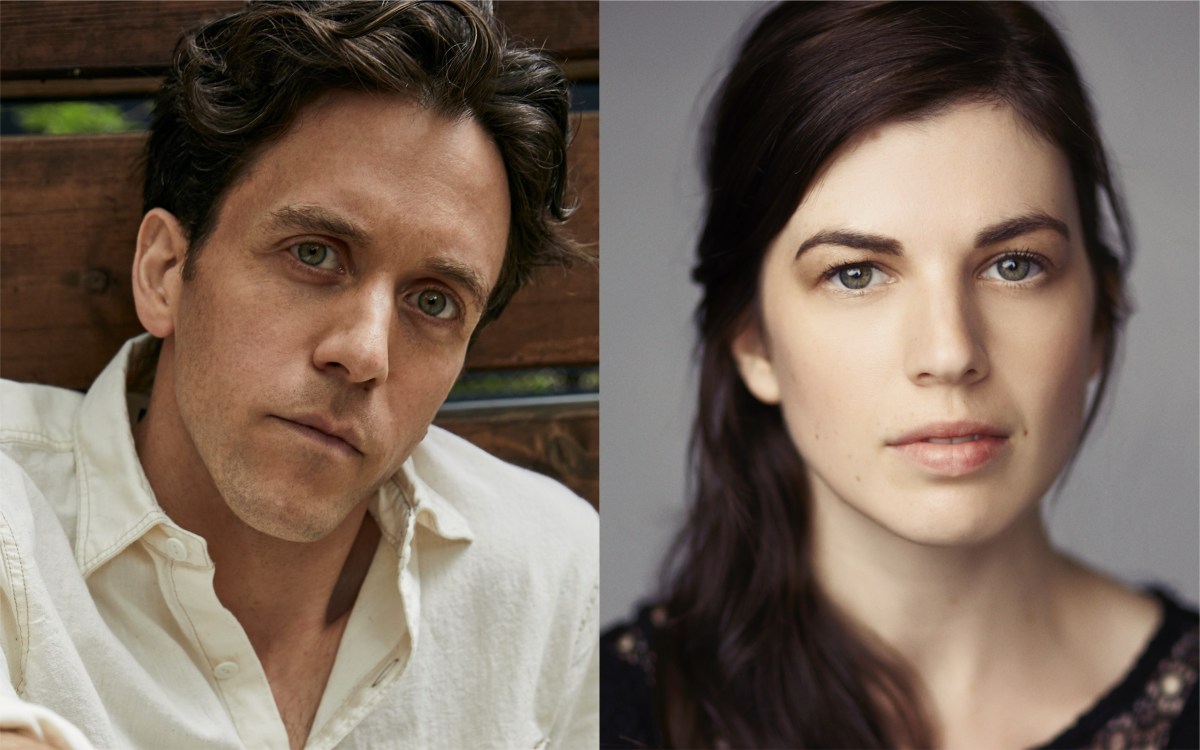
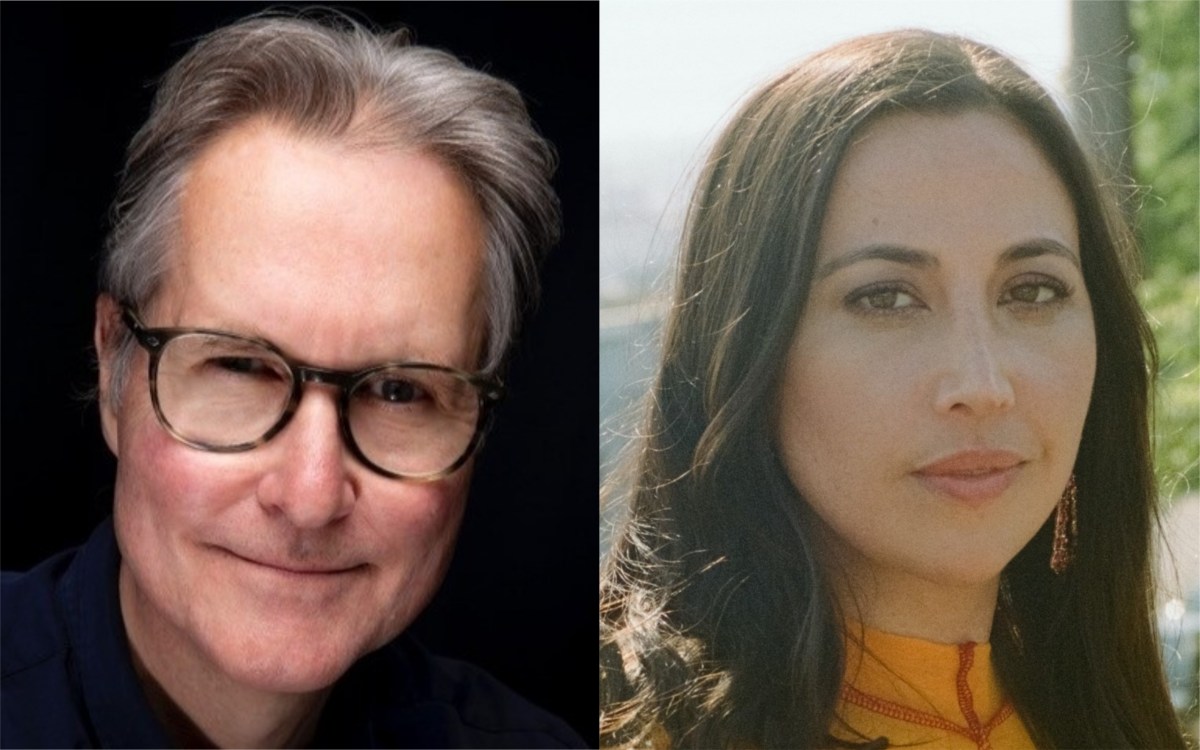
Ashley Zukerman has returned to Australia to star in sci-fi In Vitro, directed by Will Howarth and Tom McKeith.
Cast opposite the Succession and The Lost Symbol star is Talia Zucker, who co-wrote the script with the directors.
Set in regional Australia of the near feature, on a remote cattle farm, In Vitro sees Zukerman and Zucker play a husband and wife who have been experimenting with biotechnology and developing new farming methods.
The couple live a mostly isolated existence, but when a series of unsettling occurrences take place, they soon discover a disturbing presence on the farm that threatens to upend their lives.
Howarth also stars in the project, which has just wrapped production in regional NSW across Cooma and Goulburn. Post will take place in Orange, where it is expected to create 127 local jobs.
McKeith and Howarth wrote the 2015 Philippines-set boxing drama Beast together, which McKeith directed with his brother, Sam. It premiered at the Toronto International Film Festival where it was nominated for Best First Feature.
In Vitro was selected for the Sundance Screenwriters Lab in 2016. Zucker and Howarth met in Los Angeles where they both moved after being nominated for the Heath Ledger Scholarship.
The film is produced by Arcadia, who boarded the project after last year’s MIFF 37ºSouth Market and Fictious, Howarth’s production and talent management outfit with partner Matilda Comers.
Arcadia’s Lisa Shaunessy and Bec Janek produce alongside Howarth for Fictious and Rachael Fung.
Comers, Zukerman, Alexandra Burke, Anna Dadic, Michael Agar and Clement Dunn serve as executive producers. Screen Australia has provided major production funding, with support from Screen NSW, Mind the Gap, Fictious, and Arcadia.
“Our goal with In Vitro is to create a bold sci-fi with compelling characters that expresses something important about the times we live in,” said Howarth and McKeith in a joint statement.
“We’re so excited to be working on this project with such a great team and are thrilled to be supported by Screen Australia, Screen NSW, and the Sundance Institute.”
Arcadia’s Shaunessy said: “In Vitro is a dark love story that sent chills down my spine the first time I read it. Teaming with Will and Matilda at Fictious; and with Tom, Talia and Ashley rounding out the dynamic creative team alongside Arcadia – it’s exciting to be collaborating with such experienced and talented storytellers. Combined with the incredible locations like the majestic Snowy-Monaro and our super talented heads of department, we really look forward to bringing In Vitro to the screen.”
Netflix has ordered Brouhaha Entertainment’s adaptation of Trent Dalton’s Boy Swallows Universe, more than two years after publisher HarperCollins announced it had sold the screen rights to the author’s debut novel.
Happy Feet scribe John Collee will write an eight-part series based on the semi-autobiographical book, which has gone on to sell more than 500,000 copies since its release in 2018.
The story centres on Eli Bell, a young boy growing up in Brisbane during the 1980s that is forced to navigate a lost father, a mute brother, a junkie mum, a heroin dealer for a stepfather, and a notorious crim for a babysitter.
Executive producing are Troy Lum and Andrew Mason of Brouhaha, alongside Blue-Tongue Films’ Joel Edgerton, Chapter One’s Sophie Gardiner, and Anonymous Content’s Kerry Roberts.
In a statement, Dalton said he had always dreamed about what it would be like to see stories on his television screen from the world he knew.
“When I was a boy, television was an escape,” he said.
“You can’t see the holes in the fibro walls when all you see is Winnie Cooper’s face on The Wonder Years.
“I never saw the world I knew in books, in movies, in television. That often brutal suburban Australian world that was just outside my window and the magical world secretly growing inside my head.
“Boy Swallows Universe is every aspect of that world. And people across this wild earth are about to step inside that world with their ears and eyes and hearts wide open.”
Netflix director of originals in Australia Que Minh Luu said the commission was a coup for the streamer’s ANZ branch.
“Boy Swallows Universe is truly something special, and it’s an enormous privilege to partner with Trent Dalton, Joel Edgerton, and Brouhaha Entertainment in bringing this genuinely iconic Australian story to Netflix,” she said.
“As Australians, we know how much investing in local content matters. Boy Swallows Universe is a major milestone in our mission to unearth uniquely local stories that bring joy and connection in unexpected ways to our audiences here at home, and throughout the world.”
Casting for the series is expected to start next week.
Claudia Jessie, Rachel Griffiths, and Richard Roxburgh.
Nine and Stan have co-commissioned a new four-part series based on the 2002 Bali bombings.
Production has begun in Western Sydney on the Screentime and Endemol Shine Australia drama, which is being developed in consultation with those directly impacted by the tragedy.
It’s been nearly 20 years since the terrorist attack on two of Kuta Beach’s busiest nightclubs killed 202 people, which saw local Balinese and Australian and British tourists scramble to rescue the injured and comfort the dying.
Bali 2002 is set to explore how everyday heroes from Bali, Australia, and beyond defied the odds to bring order from chaos and hope from despair.
Leading the cast are Rachel Griffiths and Richard Roxburgh, alongside Claudia Jessie (Bridgerton), Sean Keenan, Ewen Leslieand Arka Das.
There will also be appearances from a range of Australian and Balinese actors, including Anthony Wong, Paul Ayre, Maleeka Gasbari, Gerwin Widjaja, and Sri Ayu Jati Kartika.
Kerrie Mainwaring is producing for Screentime, with Tim Pye executive producer alongside Sara Richardson for Endemol Shine Australia, Michael Healy and Andy Ryan for the 9Network, and Cailah Scobie and Amanda Duthie for Stan.
Mainwaring said it was an important story for all Australians.
“We have worked hard to bring together this terrific cast and team of creatives to honour the story of all those Australians, Indonesians and others who experienced the terrible tragedy in Bali in 2002,” she said.
The series, which has major production investment from Screen Australia, in association with Screen NSW, marks the first original drama series co-commission between 9Network and Stan.
Healy, Nine director of television, said it would not be the last.
“It is a privilege for the 9Network and Stan to mark the 20th anniversary of the Bali bombings with this landmark drama,” he said.
“The Bali bombings were a turning point in Australian and Indonesian history and we are proud to have such an outstanding multinational cast and creative team on this project.
“Bali 2002 is first of many co-commissions between 9Network and Stan, and we look forward to making more announcements on these collaborations in the coming months.”
Scobie, Stan chief content officer, said the streamer was looking forward to continuing its close collaboration with the teams at the 9Network, Screentime and Endemol Shine Australia on the project.
“Developed in collaboration with world-class creatives from Australia and Indonesia, and in consultation with those directly impacted, Bali 2002 promises to be a powerful, inspiring, and sensitively told drama series that pays respect to everyday heroes from Australia, Bali, and beyond,” she said.
Endemol Shine Australia CEO Peter Newman said the company was “genuinely delighted to be on board for the project.
“ESA is incredibly proud to produce a series that means so much to so many. Triggered by an event that shocked the world, Bali 2002 is a story of resilience and heroism born from the darkest tragedy,” he said.
“This is a gripping four-part series that is evocative, sensitive and reflective of the stories that have been told directly from those impacted by this event.”
Bali 2002 will premiere later this year. Banijay Rights is responsible for international distribution.
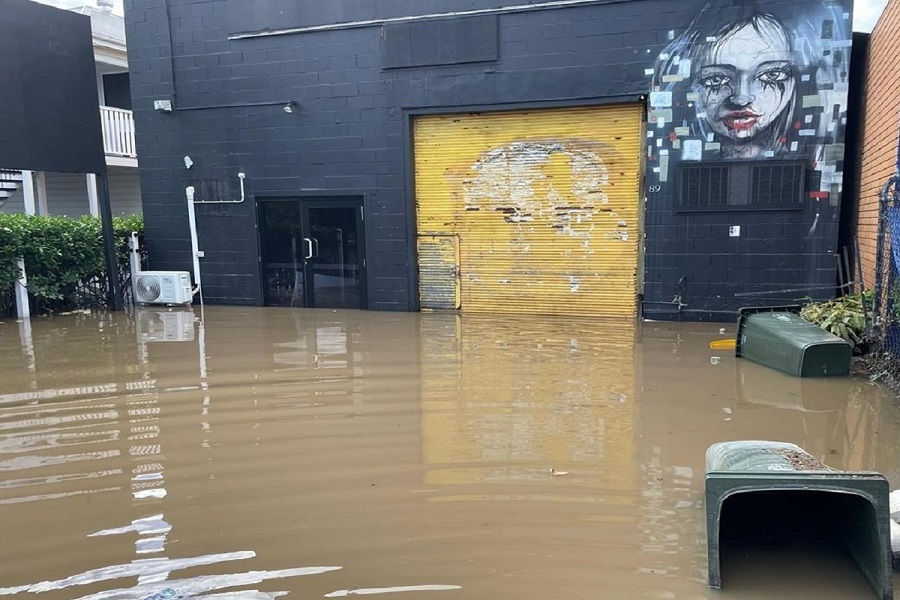
The Steve Jaggi Company’s Brisbane studio following the weekend’s rain.
Queensland’s The Steve Jaggi Company (SJC) has reported flood damage to its Brisbane studio facility from the deluge dumped on the state last weekend, as screen communities in affected areas remain on high alert.
Record-breaking downpours have devastated South East Queensland and Northern NSW across the past few days, flooding thousands of homes and leading to mass evacuations of regional towns.
In Brisbane, 80 per cent of the city’s annual rainfall fell across three days, while 30 suburbs across the wider region received more than 1,000mm.
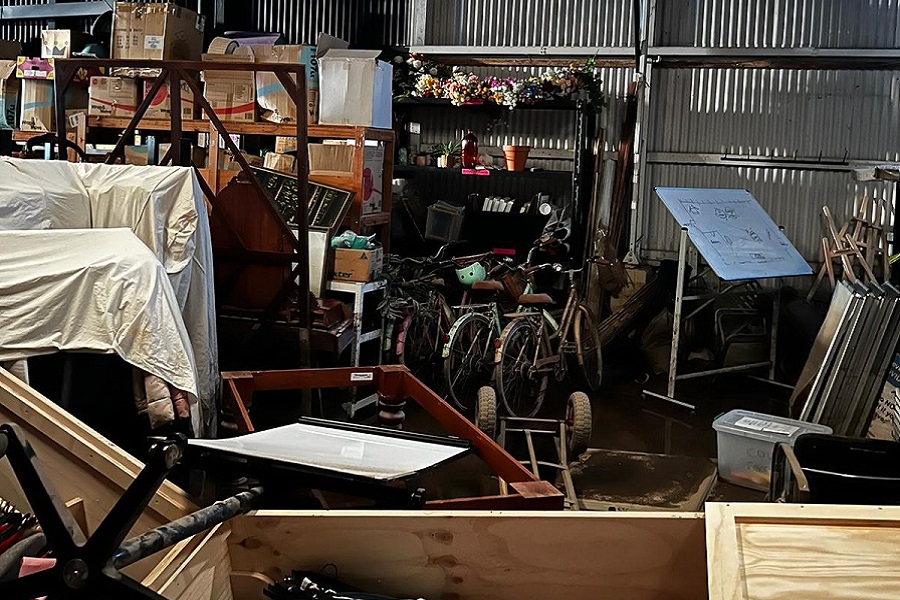
SJC is among the businesses counting the cost of the weather event, which flooded its 650 square metre studio facility in inner north-eastern suburb of Albion, damaging props and costumes, as well as two cameras.
Founder and chief creative officer Steve Jaggi estimated that about 80 per cent or more of the building’s contents were destroyed, with the overall costs expected to “inch towards $500,000”.
“I’m hoping we can salvage some of the costumes because we have more than 2,000 items but I think the props are probably fully written off,” he said.
“The problem with floodwater is that it’s saltwater that has oil and sewerage, so once it mixes with prop materials such as wood and polystyrene, you pretty much have to write the props off.
Props and costumes in the Steve Jaggi Company Brisbane studio.
“We lost two cameras and two underwater housing systems, so just in terms of camera damage, we are talking more than $200,000.”
Having wrapped that shoot on Friday, Jaggi said the company would be forced to reconfigure its schedule for the rest of the year as a result of the floods.
“We try to do a movie every two months give or take, so we have two movies we are working on as well as a television program that we are building sets and props for,” he said.
“The movies will probably be pushed back several months because of what we have lost.”
Elsewhere in the state, Screen Queensland says producers have so far not reported “any damage or major delays to their productions”, with CEO Kylie Munnich saying organisation will continue to support projects “to ensure they can continue to film”.
“Our thoughts are with everyone in Queensland and New South Wales who have suffered through this dreadful weather event,” she told IF.
Further south in NSW, Northern Rivers communities have borne the brunt of the damage this week, with Lismore getting more than 700mm of rain across 30 hours on Sunday and Monday, while residents of Ballina, North Ballina, and West Ballina were told to move to higher ground on Tuesday morning.
National not-for-profit organisation Screenworks is among the occupants of Ballina’s business district, operating out of an office on River Street.
The regional screen body was due to have its first webinar of the year – a session about finding pathways to audience with producer/director/writer Rosie Lourde and producer Hayley Adams – on Tuesday but decided to postpone it as a result of the unfolding floods.
CEO Ken Crouch told IF that while all of his staff had so far generally avoided being directly affected by the rising water levels, the wider screen community would take time to recover.
“Our office in Ballina will be closed this week but we expect it will remain above flood levels.
“We are all working from home to minimise travel, although technology like internet and phone is a bit sketchy across the region (a lot of roads are closed or damaged, so many of us couldn’t get to the office anyway).
“We all have friends and loved ones, in addition to Screenworks members and industry people, who have been impacted by what has happened in Lismore and across all of the region, so I expect that the next few days/weeks will be challenging for many as people recover and clean up from this disaster.”
Screenworks is currently raising funds to help screen practitioners and businesses in the Northern Rivers region who have been impacted by the floods. Find out more about how to donate here
There had been hope of the program continuing with a different broadcaster, however, Fremantle today released a statement saying it had been unable to find one.
“We are so sorry to say that after nearly 37 years and almost 9,000 episodes broadcast we have to confirm that Neighbours will cease production in June,” the spokesperson said.
“Following the loss of our key broadcast partner in the UK and despite an extensive search for alternative funding, we simply have no option but to rest the show.
“To our amazing, loyal fans, we know this is a huge disappointment, as it is to all of us on the team. We thank you for all your messages and support and promise to end the show on an incredible high. From here on, we are celebrating Neighbours.”
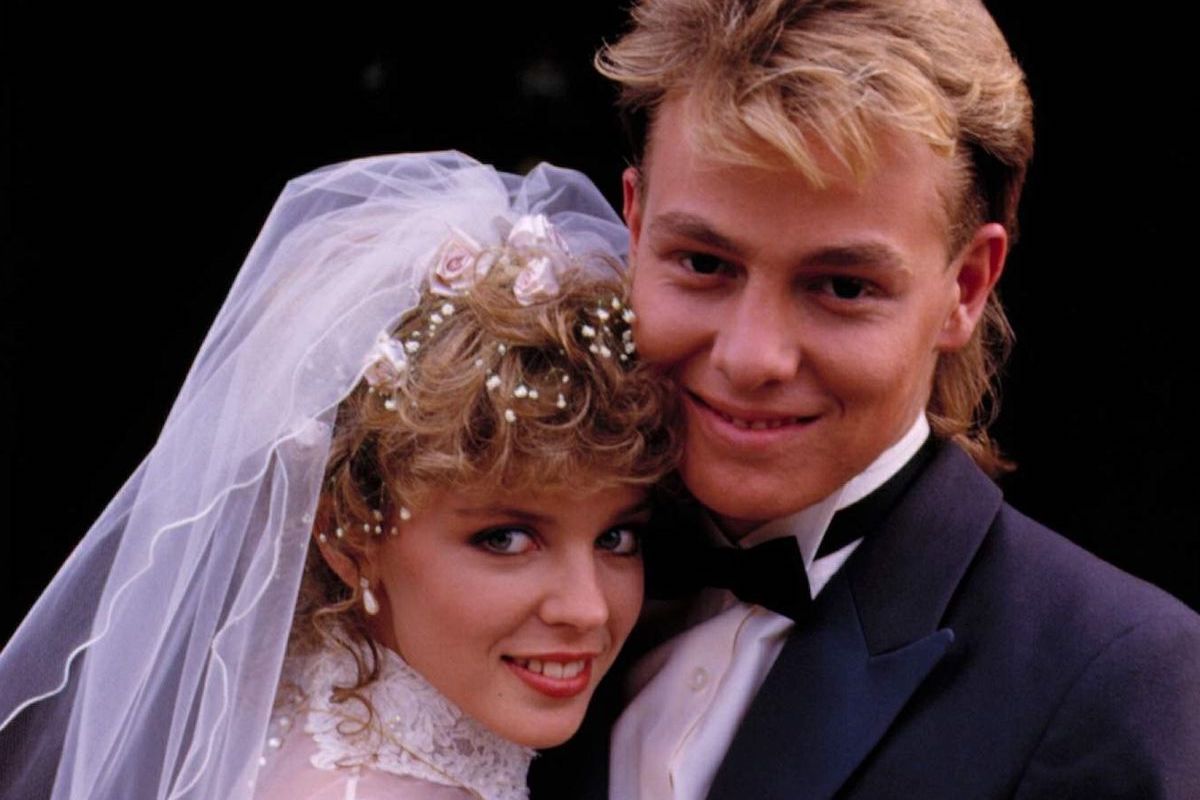
The soap has been responsible for launching the careers of people such as Jason Donovan, Kylie Minogue, Margot Robbie, and Liam Hemsworth, and has served as key training ground for industry, particularly writers and directors.
More than 60,000 fans signed a petition to save the series in the past few weeks.
A new Australian TV drama series Troppo began screening on ABC1 on Sunday 27 February 2022
Crime drama Troppo, starring Thomas Jane and Nicole Chamoun, is set to kick off the ABC’s 2022 Australian drama slate.
Created by Yolanda Ramke and inspired by Candice Fox’s novel Crimson Lake, Troppo is set in Far North Queensland and centres on Jane’s Ted Conkaffey, a disgraced ex-cop who is recruited by an ex-con turned private investigator, Amanda Pharrell (Chamoun) to solve the disappearance of a Korean family man and tech pioneer.
Set in the wilds of tropical Far North Queensland, Troppo centres on a disgraced ex-cop Ted Conkaffey (Thomas Jane), who is recruited by an ex-con turned private investigator, Amanda Pharrell (Nicole Chamoun), to solve the disappearance of a Korean family man and tech pioneer.
From crocodile infested waters to a tech start-up’s headquarters, this unlikely pair of investigators poke their noses where they’re not wanted – much to the annoyance of the local police. As they edge closer to the truth, exposing the underbelly of the Crimson Lake community and opening old wounds, they find themselves plunged into a fight for survival.
Troppo is an EQ Media Group and Beyond Entertainment production in association with Renegade Entertainment. Karl Zwicky is the series producer, with executive producers Greg Quail, Lisa Duff and Simonne Overend (EQ Media Group), Mikael Borglund and David Ogilvy (Beyond Entertainment); Stuart Ford and Lourdes Diaz and co-EP Matt Bankston (AGC Studios); Sally Riley and Andrew Gregory (ABC); and Thomas Jane and Courtney Lauren Penn (Renegade Entertainment); and Ramke.
The script producer was Jane Allen, with writers Blake Ayshford, Penelope Chai, Kodie Bedford, Craig Irvin and Andrew Lee. Jocelyn Moorhouse was the set-up director, alongside Catherine Millar, Grant Brown, and co-directors Ramke and Ben Howling.
Major production finance comes from the ABC, AGC Studios in association with Aperture Media Partners, and Screen Australia in association with Screen Queensland and with support from the City of Gold Coast.
The eight-part drama will premiere February 27 at 8.30pm on ABC TV, with all episodes available to binge on ABC iview.
Fremantle Australia has named Greg Woods as CEO while outlining a new company structure that will bring its entertainment, reality, and gameshows under Eureka Productions.
The restructure means Chris Culvenor and Paul Franklin’s Eureka Productions, which Fremantle increased its majority stake in last year, will take over production on titles such as Australia’s Got Talent, Australian Idol and Farmer Wants A Wife.
Prior to taking the top job, Woods served as Fremantle’s chief financial officer for nearly 14 years.
He said he was “incredibly excited” to be taking the reins at the company.
“I am so very proud to be working with the most talented and passionate people who will shape the irresistible content of the future,” he said.
Fremantle CEO Jennifer Mullin said he was well suited to the top job.
“Greg has been a key part of the Fremantle Australia leadership team for 13 years, this is a natural progression at an exciting time for the business,” she said.
“And I have known and worked with Chris and Paul for many years and have no doubt that our entertainment catalogue in Australia will continue to thrive in their hands.”
Once upon a time, a young writer looking to cut their teeth might have started out in an entry-level role on a series like A Country Practice, McLeod’s Daughters or All Saints.
Those long-running dramas provided a training ground for aspiring scribes, offering long-term employment in large teams where they could build skills and networks.
Today, with the exception of flagship serials Home & Away and Neighbours, long-running drama has all but disappeared from our screens (and as is well documented, Neighbours‘ future is uncertain). With it, the traditional training opportunities for new writers and directors have been reduced; the trend towards higher budget, shorter-run premium drama means there is often less capacity for producers and broadcasters to take a risk on a new face.
Over the past five years, the Australian Writers’ Guild (AWG) has observed the demand for competent note-takers and script co-ordinators has often exceeded supply, while at the same time, aspiring writers with limited networks are unsure as to how to get a foot in the door.
“There is no formal tertiary training for note-takers and script coordinators,” AWG professional development manager Susie Hamilton tells IF.
“It’s the sort of thing that people learn on the job. The problem is, how do you get that job without first gaining the skills? And when you do get the chance to be a note-taker in a writers’ room, how do you know what’s expected of you and how to deliver what is required?”
To redress the conundrum, with the support of Screen NSW, AWG has opened applications today for First Break – a three-day workshop program that will cover note-taking, script coordinating and the basics of a writers’ room.
While only open to NSW residents at this time, the guild hopes to roll the program out across Australia over the next year.
First Break builds upon previous note-taker and script coordinating workshops run by the AWG, while also combining them with “vital training in writers’ room etiquette and process”. First Break is designed to be practical, and lead to paid work.
“The role of the note-taker is a crucial one in a writers’ room. Creating a perfect set of notes requires a specific set of skills, and nailing it requires a completely different approach from screenwriting,” says Hamilton.
“The first workshop will guide participants in how to create detailed and accurate notes. The second workshop will explain what a script coordinator does and how they operate within a production office. Finally, they will learn the etiquette, expectations and hierarchy of a writers’ room. This is a vital element of First Break, ensuring that participants are well placed to take full advantage of the opportunity to work in a writers’ room and to build on it.”
The program will be facilitated by Chris Corbett (Halifax: Retribution, My Life is Murder, Newton’s Law, Miss Fisher’s Murder Mysteries) and SBS development executive Catherine Kelleher, who has worked as a script coordinator, producers assistant and note-taker on series such as The Letdown, Glitch, A Place to Call Home, The Heights, The Secret She Keeps and Little J & Big Cuz.
Following the successful completion of these three workshops, each writer will be added to the AWG’s Pathways website on the new ‘First Break’ tab.
The cohort will then be promoted to industry using the AWG’s databases including its 9,700 subscribers to the AWG newsletter, the 500+ registered users of the Pathways portal (producers, directors, writers and industry professionals) and the 1,000 subscribers to the Pathways Newsletter.
The need for programs like First Break seems highlighted as Neighbours‘ future hangs in doubt.
“Neighbours is jokingly referred to as Neighbours University for a reason,” Hamilton says.
“It’s been a place where, for decades, emerging talent have been able to learn necessary skills and hone their talent.
“If we lose Neighbours from our screens, there will be even fewer opportunities for new writers and that will be to the detriment of the Australian film and TV industry now and well into the future.
“The AWG is constantly evolving its approach to developing professional development opportunities for writers. The industry landscape is changing, and we are adapting our offering to complement it. The idea behind First Break was to fill that ‘training ground’ gap left by the absence of long-running series.”
Applications close for First Break at 5pm, March 25, with the successful 12 applicants to be announced May 4. First Break will be held via Zoom over the first three Saturdays in June 2022 and applicants must be able to attend each of the workshops on the set dates. Apply here.
Facebook is struggling to retain users, fending off regulation, trying to pivot to VR, and paying a massive wage premium to attract the workers it needs to make any of this happen. The company is on the ropes
‘After years of slowing US growth, Facebook just experienced its first-ever US shrinkage, which precipitated a $230bn stock crash, the largest in global corporate history.’ Photograph: Jakub Porzycki/NurPhoto/REX/Shutterstock
I’ve been praying for Facebook’s collapse ever since it attained liftoff. In a 2007 article, I predicted that “your creepy ex-co-workers will kill Facebook” by demanding to know why you won’t “friend” them, prompting an exodus to the next platform. That was the social network cycle back then: a new network opens, and you and the people you genuinely like enjoy a rollicking group chat until all the people you have to pretend to like show up.
That’s the double-edged sword of products that rely on “network effects” – the economists’ term for a product that gets better when more people use it. Sure, you might join Facebook because your friends are all there (and more people might sign up because you’re there), but that also means that every time your friends leave Facebook, it’s a reason for you to leave, too.Advertisementhttps://c0100bfd1eb1c7da3e61c5a2da581cac.safeframe.googlesyndication.com/safeframe/1-0-38/html/container.html
My prediction failed. For a decade and a half, Facebook resisted the fate of all the social networks that preceded it. In hindsight, it’s easy to see why: it cheated. The company used investor cash to buy and neutralize competitors (“Kids are leaving Facebook for Insta? Fine, we’ll buy Insta. We know you value choice!”). It allegedly spied on users through the deceptive use of apps such as Onavo and exploited the intelligence to defeat rivals. More than anything, it ratcheted up “switching costs.”
“Switching costs” is another economic term: it means “the price you pay when you switch from one service to another.” Switching from Facebook to a rival means saying goodbye to the communities, friends and customers you hang out with on the platform. Normally, tech has really low switching costs: want to change from T-Mobile to Verizon? Just port your number. Your friends don’t even have to know you did; they can still call you and you them.
Tech’s rock-bottom switching costs are what kept the industry so dynamic in its early days. Microsoft could deploy an army of corporate salespeople to turn Microsoft Office into an industry standard, then Apple could come along and reverse-engineer the Office formats and make the interoperable iWork office suite. That means that Windows users could switch to the Mac and open their Word docs in Pages, their Excel spreadsheets in Numbers and their PowerPoints in Keynote.
It’s different for Facebook. The company’s ascendancy coincided with an overall concentration in the tech sector, and, with it, laws that protected winners of the latest round of the interoperability wars from new challengers. Apple was able to reverse-engineer its way out of the Microsoft Office trap, but woe betide a company that tries the same trick on Apple – try to make a program that lets you run iPhone apps on an Android device, or read the media files you buy in Apple’s book, movie or music stores, and you will quickly discover that the law is now on the sides of the giants, not the upstarts.
That same legal shift is how Facebook has kept its switching costs high. Fifteen years ago, it was safe to make a Facebook-MySpace bridge that would let you leave MySpace but stay in touch with your friends there by scraping your MySpace inbox and moving the waiting messages to your Facebook inbox. Try to build one of those bridges today – blasting an escape tunnel through Facebook’s walled garden – and Facebook will sue you until the rubble bounces.
But high switching costs have their limits. If you make your service terrible enough, a certain number of users will find the cost of switching preferable to the pain of staying. And as users leave, network effects start to work in reverse: though every user that joins makes your service more valuable, every user that leaves makes the service less valuable. If you’re only on Facebook to stay in touch with a small group of friends, each one of those friends who departs makes it easier for you to make the jump, too. And once you go, it’s even easier for the rest of the group to bail.
This is very bad news for Facebook. After years of slowing US growth, Facebook just experienced its first-ever US shrinkage, which precipitated a $230bn stock crash, the largest in global corporate history.
Though most of Facebook’s users are global, its US users generate far more profit than users in the rest of the world. Losing a US user is expensive. Even more important: the US is Facebook’s home base, and its US user base is its main bargaining chip in resisting US regulation, and in securing US support in its regulatory battles abroad.
Speaking of regulatory battles abroad: Facebook is on the brink of having its business model declared illegal under the European Union’s General Data Protection Regulation (GDPR). Fending off that scenario will depend on vast capital expenditures and friendly European regulators, and Facebook’s running short on both. Oh, and Europeans are Facebook’s second most valuable users.
Admittedly, when a company’s shares decline, it’s not like the company itself has lost any money – those losses hit shareholders, not the business itself. However, Facebook’s costs and share-price are intimately bound together, thanks to tech firms’ reliance on stock grants as a way of scoring a discount on their wage-bills. Engineers, lawyers, and other high-paid, in-demand professionals are glad to take much of their compensation in stock, betting that the company’s share price will balloon and that they can cash out their shares and keep their winnings, thanks to the tax-preferred status of capital gains – in most of the world, the wages you earn for doing useful work are taxed at a much higher rate than the winnings you get from lucky bets on stocks.
Even before its stock fell off a cliff, Facebook was mired in a multi-year hiring crisis. Nobody wanted to work for Facebook because it’s a terrible company that makes terrible products that everyone hates and only use because the company has rigged the system to punish users for switching.
Facebook was already paying a wage premium, offering sweeteners to in-demand workers in exchange for checking their consciences at the door. Those sweeteners mostly took the form of shares, which means that all those morally flexible “Metamates” got a hefty pay-cut when the company’s stock price fell off a cliff. Expect a lot of them to leave – and expect the company to have to pay even more to replace them. Companies with falling share prices can’t use share grants to attract workers.
Facebook is now famously trying to pivot (ugh) to virtual reality to save itself. It’s an expensive gambit. It’s going to alienate a lot of its users. It’s going to alienate a lot of its in-demand workers. It’s going to freak out a lot of regulators.
Meanwhile, the switching costs for people who want to jump ship keep getting lower. It’s not merely that fewer and fewer of the people you want to talk with are still on Facebook. Even if there’s someone whose virtual company you can’t bear to part with, lawmakers in the US and Europe are working on legislation that would force Facebook to allow third parties to “federate” new services with it. That would mean that you could quit Facebook and join an upstart rival – say, one by a privacy-respecting nonprofit or even a user-owned co-op – and still exchange messages with the communities, customers and family you left behind on Facebook’s sinking ship.
For 15 years, I’ve been waiting for Facebook to suffer the fate of every network-effects-driven success story – to experience the precipitous decline that is triggered by people leaving the service and taking the value they brought to it with them. Facebook now has to somehow retain users who are fed up to the eyeballs with its never-ending failures and scandals, while funding a pivot to VR, while fending off overlapping salvoes of global regulatory challenges to its business model, while paying a massive wage premium to attract and retain the workers that it needs to make any of this happen. All that, amid an exodus of its most valuable users and a frontal regulatory assault on its ability to extract revenues from those users’ online activities.
Stein’s Law holds that “if something cannot go on forever, it will stop.”
Facebook can’t go on forever.
Cory Doctorow is a science fiction author, activist and journalist. He is the author of many books, including the forthcoming book Chokepoint Capitalism, with Rebecca Giblin, about monopoly and fairness in the creative arts labor market. In 2020, he was inducted into the Canadian Science Fiction and Fantasy Hall of Fame
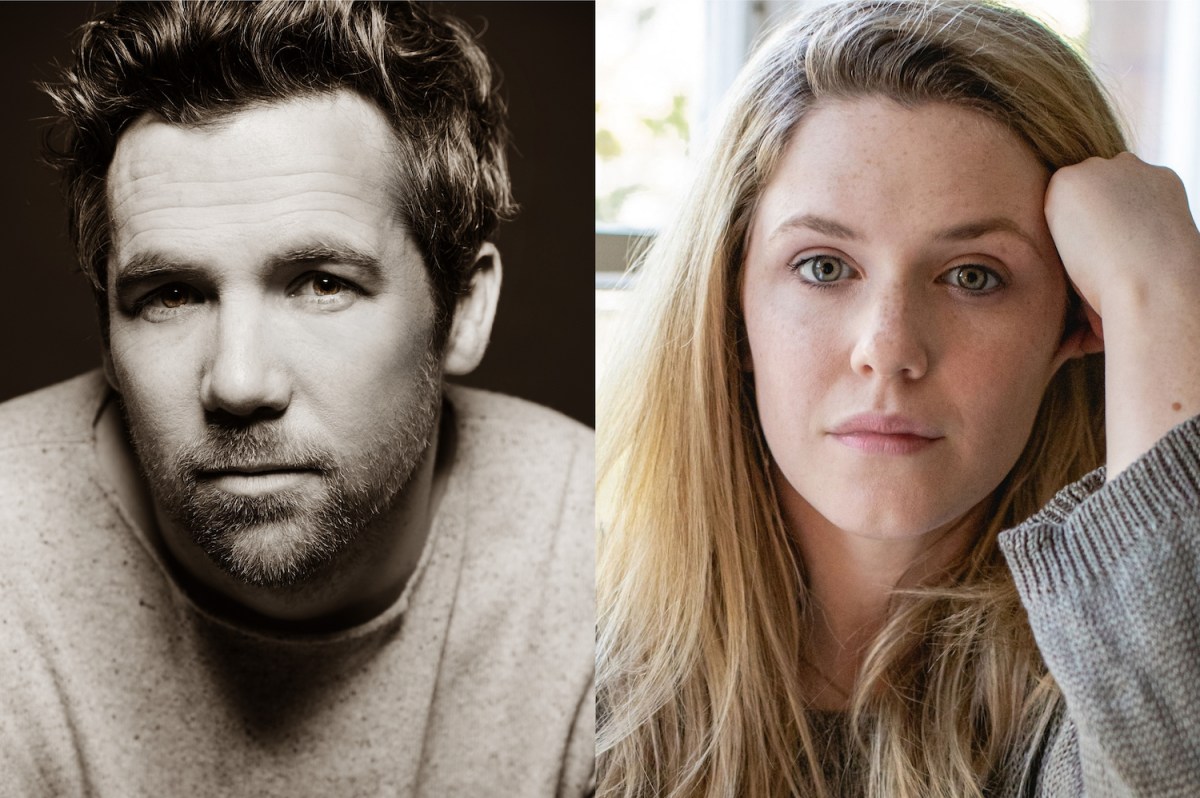
Husband and wife team Patrick Brammall and Harriet Dyer are the creators, writers and stars of rom-com Colin From Accounts, the latest project to be commissioned by Binge.
Now shooting in Sydney, the eight-episode series centres on Ashley (Dyer) and Gordon (Brammall), two single(ish), complex humans who are brought together by a car accident and an injured dog.
Trent O’Donnell, Matt Moore, and Madeleine Dyer direct the Easy Tiger Productions and CBS Studios project. Rob Gibson and Ian Collie produce for Easy Tiger with executive producers Brammall, Harriet Dyer, O’Donnell, Alison Hurbert-Burns and Brian Walsh.
IF understands Emma Paine is the cinematographer, though Binge declined to share details of other heads of department at this stage.
Colin From Accounts has been in train at Binge for two years, brought to executive director Hurbert-Burns by Gibson – the pair having previously worked together at Stan.
It marks the Foxtel-owned service’s second original commission since its launch in May 2020, the first being romantic drama Love Me, which started streaming Boxing Day last year.
While there are undoubtedly pressures in determining a service’s first originals, Hurbert-Burns tells IF it didn’t take a lot to get Binge on board here.
From early Zoom meetings with Brammall and Dyer, she and Foxtel executive director of television Walsh could see it would be funny. When the first script came through, she found herself laughing out loud.
“Life‘s complicated. Relationships aren’t straightforward. Both these characters are doing the best that they can – maybe yet to reach full stride and hit their potential. A little bit of needing to get out of the way of themselves in order to connect fully with another person. I liked how that was done through humour… It’s grounded. It’s realistic,” Hurbert-Burns tells IF.
“These are characters that you could imagine living in Newtown or Newcastle on King Street. I think that’s a really good way in, because it’s not glossy or too distant; you can imagine who these people are. You’ve met people like these characters. And the path to love is not straightforward. This one includes a dog, a car crash and a bit of a hot mess.“
Easy Tiger’s Gibson and Collie said: “Dyer, Brammall, rom-com, cute dog: what’s not to love? It’s a delight to be working on this hilarious and big-hearted show with Harriet, Patrick, Trent, Matt and Maddy, which is a ridiculous amount of talent all in the one place.
“We’re very grateful to our partners at BINGE and CBS Studios, who immediately saw the appeal of Colin from Accounts for their audiences in Australia and around the world, and also of course to Screen Australia and Screen NSW for their wonderful support.”
As for what is next for Binge, which recently reached 1 million subscribers, Hurbert-Burns says it is currently “working out what is next for Love Me“, hinting that there may be a second instalment. Beyond this, she is looking for pitches that stop her in her tracks, particularly great drama. She notes her previous advice to IF still stands: “beautiful dramas and comedies that are broad in their appeal.”
Colin From Accounts distributed outside Australia and New Zealand by ViacomCBS Global Distribution Group. Major production funding comes via Screen Australia with support from Screen NSW.