The purported redundancy of the man who once invented a new award to avoid embarrassing Robert De Niro has left many hoping for a fresh start. Except he’s refusing to go.

Michael BodeyFilm writer
Mar 27, 2026 – 3.02pm
When Robert De Niro arrived at the 2nd AACTA International Awards in 2013 expecting an award for his performance in Silver Linings Playbook, there was a problem.
The Australian Academy of Cinema and Television Arts didn’t have an award for him. After producer Harvey Weinstein made his displeasure felt, AACTA CEO Damian Trewhella created a new supporting actor award on the spot. There were two spare trophies so it was hurriedly decided that De Niro’s co-star Jacki Weaver could win the until-then non-existent gong for supporting actress. AACTA later described these as “discretionary awards”.
While no one was hurt and time makes the incident comical rather than consequential, it was symptomatic of what became ongoing missteps by the organisation that describes itself as “Australia’s most prestigious film and television membership body”. It also helps explain why the film and television sector has long harboured concerns about AACTA, whose long-serving CEO was abruptly made redundant this month.
Many in the industry AACTA claims to represent believe its authority had faded, citing poor management and governance and say the awards themselves have been devalued.
Documentary filmmaker Simon Nasht says there are “industry concerns about the way AACTA conducts itself” because the awards process is “ridiculously expensive, lacks transparency and the exclusion of many craft awards really rankled.
“It seemed obsessed with stars while often overlooking the many other professional skills in the industry,” Nasht said. “While improvements were apparent in the past couple of years, the truth is that for many in the industry, AACTA was irrelevant.”
After the De Niro incident, came 2015, when The Water Diviner and The Babadook tied for Best Film. Trewhella described the “mathematical tie” as “just a freakish outcome.” The Sydney Morning Herald later reported it wasn’t a tie. The horror film topped the vote – just – but AACTA decided to share the prize. Trewhella’s view was that “as both films were so close to each other in the final standings, the fairest outcome was to award a tie.”
This month, after years of such controversies, the board announced Trewhella’s 18-year reign as boss of AACTA was over.
The low-profile Melburnian oversaw the member-based organisation and the film industry’s major award ceremony the AACTA Awards.
He earns a salary and superannuation package in excess of $350,000 annually as CEO of ‘the Academy’, a not-for-profit body with charitable status that turns over $6.6 million annually, half of which is from government hand-outs. By comparison, Screen Australia CEO Deirdre Brennan earns a base salary of $381,603 for overseeing an agency with more than $100 million income and 55 ongoing employees.
AACTA chair Jack Christian announced last week the CEO’s role had been made redundant in a restructure: “The Board of the Australian Film Institute has recently implemented a revised management structure, and as part of that process, Damian Trewhella has left the role of chief executive officer.”
Christian added the Board has commenced an independent review. Trewhella promptly fired back, stating: “I have not resigned, nor have I agreed to step down.” He said he remained “fully committed to returning to my role as CEO of AFI AACTA and to serving our members and the Australian Film and Television industries.”
AFR Weekend approached both Christian and Trewhella for comment. Neither spoke due to potential legal proceedings,
Trewhella joined AACTA in 2006 when it was known as the Australian Film Institute – the name it still trades under – and his then-mother-in-law Maggie Gerrand was an AFI board member. In 2008, he was surprisingly elevated to general manager.
One constant since the AFI adopted the AACTA name in 2011 has been a rapid and continual turnover of board members, particularly in the last decade.

Among the industry stalwarts to come and go as board directors in the past decade are actor Noni Hazlehurst, reviewing icon Margaret Pomeranz, Universal Pictures International Australia boss Mike Baard, Ausfilm chairman Alaric McAusland, Nine Entertainment’s managing director, streaming and broadcast Amanda Laing, director Nadia Tass, corporate lawyer Jennifer Huby, agent Mark Morrissey, producers Keith Rodger, Darren Dale, Anita Jacoby and Ian Sutherland, Geoff Brown, Foxtel’s Brian Walsh, broadcaster Russel Howcroft and long-time chair and supporter of Trewhella, Alan Finney.
Some left of their own making, including Laing, Baard and Dale, while others, including McAusland and Sutherland, are understood to have felt they were pushed out after two-year terms. The popular Jacoby lost her board role after two years when her position came up for re-election, and after her objection to Trewhella’s handling of former AACTA patron Geoffrey Rush. She lost to Jo Smith, the little-known manager of the out-of-action Regal Cinema in Newcastle. Regarded by her peers as a Trewhella acolyte, Smith also won last year’s member election, surprisingly defeating better-known and more active industry player, Marcus Gillezeau.
The only constant in board meetings for two decades has been Trewhella. The CEO is not a board position, but does oversee the membership and members votes.
The organisation’s governing memorandum of association, last amended in 2007, allows for rapid turnover of directors. The MOA is so outdated, it still only refers to its duties involving ‘film’ and makes no mention of digital services, streaming or even television.
Since the November 2023 AGM, eight members – Finney, Tass, Laing, Dale, Rodger, Smith and Huby – have left the board, which now only has the minimum three members: Christian, actor Shane Jacobson and long-time AFI legal consultant Tony Petani.
At least two members must be elected by an ordinary resolution of the members of the institute, although it is not clear who they are.
In 2019, the members’ vote for new directors was overseen by Philip Dowsley, a former auditor deregistered by ASIC. He was investigated by ASIC in 2012 and three years later found to be not a fit and proper person to remain registered.
“If you started to question things, suddenly you’re persona non grata,” said a director who says he was moved on after requesting transparency.
The veracity of AACTA’s awards system has also often been questioned. While some of the criticism may be sour grapes, AACTA Award eligibility requirements and entry dates for some films and categories have been changed arbitrarily. Staff and vendors also note AACTA’s desire to attract the highest-profile stars of the moment to their ceremony each year; coincidentally, winning awards might encourage their attendance (last year, it was Margot Robbie; this year Jacob Elordi, although the Frankenstein star couldn’t attend the February ceremony AACTA’s despite requests. His Academy Award nomination took precedence).
Does it even matter? From the outside, criticism of the awards and the industry group that runs them looks like not-very-serious people arguing about baubles and stage time.
But the AFI/AACTA Awards have been a touchpoint for Australian screen culture to such an extent its high-profile, non-executive group currently includes AACTA president Russell Crowe, vice president Nicole Kidman, patron Dr George Miller and ambassadors Cate Blanchett, Baz Luhrmann and Catherine Martin.
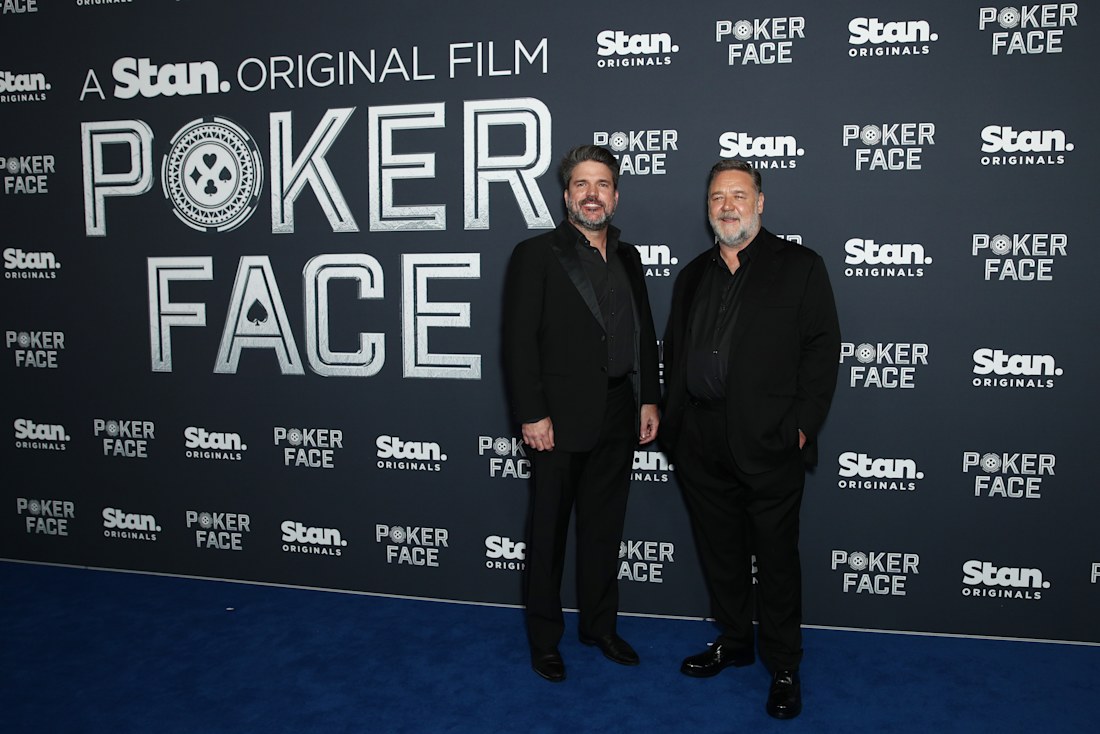
Crowe, particularly, has devoted much effort in the past two decades to resuscitate the awards. He and others appreciate the awards’ lineage, profile and its role in boosting the nascent Australian film industry of the 1970s. You can’t argue with a legacy of directing winners including Peter Weir, Fred Schepisi, Baz Luhrmann,Jane Campion to Jennifer Kent and Warwick Thornton.
Oddly, respect for the AFI/AACTA legacy has undermined its current status. Board directors are unwilling to make their concerns public because it would destabilise an organisation they value and reflect poorly upon non-executive stars such as Kidman and Blanchett who provide their time and power. However, AFR Weekend spoke to more than five directors who said they were concerned about management accountability and related governance issues.
Until 2023, the CEO chaired board meetings and acted as secretary, also writing the minutes. Questions or complaints raised in board meetings were not minuted. AACTA does not have a risk and audit committee, nor does it file directors’ reports. AACTA’s accounts have been passed between four different auditors in the past eight years and the annual financial reports have been filed late to the Australian Charities and Not-for-profits Commission – most recently the 2022-23 financial report.
One board member suggested Trewhella ran the organisation as a “sole trader”. The AFI corporate credit card is in his name although AFR Weekend does not suggest impropriety with its use.
The question is why has the AACTA chair decided now is the time for a restructure? And why haven’t the successive state and federal government agencies propping up Trewhella and AACTA ever called for accountability?
Partly, that’s because it is essentially an organisation that runs a single event which is funded by whichever state is in need of column inches, airtime and social media cred. This year, Queensland Minister for Tourism Andrew Powell said the AACTA Awards and Festival generated “an estimated $4.85 million for Queensland’s economy.” He didn’t show his calculations.
The Queensland government and Screen Queensland, as part of its 10-year arts and cultural strategy Queensland’s Time to Shine, are believed to be investing up to $3 million annually to host the AACTA Awards on the Gold Coast until 2028 (although it could go beyond then ; the 2025 AACTA financial report states revenue from government and other grants is $2.689 million, while sponsorship comprised $3.077 million).
Essentially, AACTA is funded to run a high-profile party each year while industry guilds, Australians In Film, Screen Producers Australia and state screen agencies promote screen culture, lobby government, develop policy, and market the industry.
Federal agency Screen Australia has wound back its hand-outs to AACTA over time and its current annual $366,000 distribution barely covers the CEO’s package.
AACTA directorships are unpaid and some departures were attributed to the volunteer role not being worth the reputational damage, says one former director who saw their future board prospects being compromised.
“When one feels one can’t get answers from the CEO or fulfil their fiduciary duties, you have to get out of there,” another said.
“We don’t get the salary, we don’t get the perks, we don’t get the credit card to push things through,” said another. “We do it because we’re passionate and want the best for the industry.”
Board requests for strategic reviews in 2017 and 2021 were kicked down the road. Key decisions were not escalated to the board. Directors suggest the CEO and long-term chair Finney had a fundamental misunderstanding of how management and boards operate. Finney served as chair from 2010-2022 and remained on the board until 2024
Board schisms were ongoing. Previous acting chair Keith Rodger was sidelined in November 2023 after he asked for a full review of the organisation’s business, primarily to establish more efficient practices.
Speaking on background, directors cited Trewhella’s lack of accountability on his salary, which had no KPIs attached, let alone a remuneration and benefits process to fulfil. Frequent international travel to Los Angeles, the Cannes Film Festival, Shanghai and beyond went unreported and the CEO would be unavailable to the board.
This week, Trewhella engaged a public relations agency and lawyers who expect to file a wrongful dismissal case in Fair Work Australia next week and have sent a letter to publications putting them on notice of potential defamatory publication.
The CEO will fight for his position to be reinstated. He declined to comment for this article, citing ongoing legal discussions. He is said to have been “blindsided” by his redundancy.
Beyond governance issues, he’s overseen a litany of embarrassing controversies, including developing the short-lived and very expensive AACTA International Awards ceremony in Los Angeles and Asia International Engagement Program, and failing to revoke its inaugural AACTA International Fellowship – another discretionary award – given to sexual predator Weinstein.
In 2017, the board split following the panicked dismissal and Trewhella’s subsequent fawning apology to AACTA patron Geoffrey Rush after sexual harassment allegations emerged. Emails submitted in Rush’s high-profile defamation case pointed to a tenuous business model that relied solely on access to talent.
“This organisation exists in a very fragile state that is heavily reliant on the generous support of discretionary partners (primarily tourism/retail) whose only real interest is in connecting with the public via the talent we can access,” Trewhella told the board in one 2017 email.
He spelt out the delicate balance, noting AACTA’s “talent association” was “the only thing we’ve been able to develop a going concern around” but was also a “major jeopardy for our business”.
In 2021, AACTA’s all-white leadership team further ruffled feathers by making it mandatory for award entrants to detail how their films and television programs promote racial, gender, sexual, religious or other forms of diversity, as a condition of entry. Subsequently, respected multi-award winning First Nations producer Darren Dale had a short stint on the board.
Growing industry, staff and vendor dissatisfaction with Trewhella accelerated during the AACTA Awards last month on the Gold Coast. The resignation of AACTA’s operations manager and vendor dissatisfaction gave AACTA chair Christian the chance to move after numerous prior discussions with stakeholders.
Christian would not speak due to the ongoing review and legal challenges. Sources suggest he is embarrassed by the position he’s been placed in after being brought in by Trewhella and then discovering an unpopular and disorganised body.
An overdue restructure will likely feature a new general manager on market rates of $180,000-$220,000 and a raft of new policies. But stability may be some way off if Trewhella doesn’t settle for a redundancy payout (four weeks’ pay for each of 18 years will be approximately $500,000, unless his contract says otherwise).
The only constant is that the AFI/AACTA Awards will continue, at least until Queensland’s funding expires in 2028.